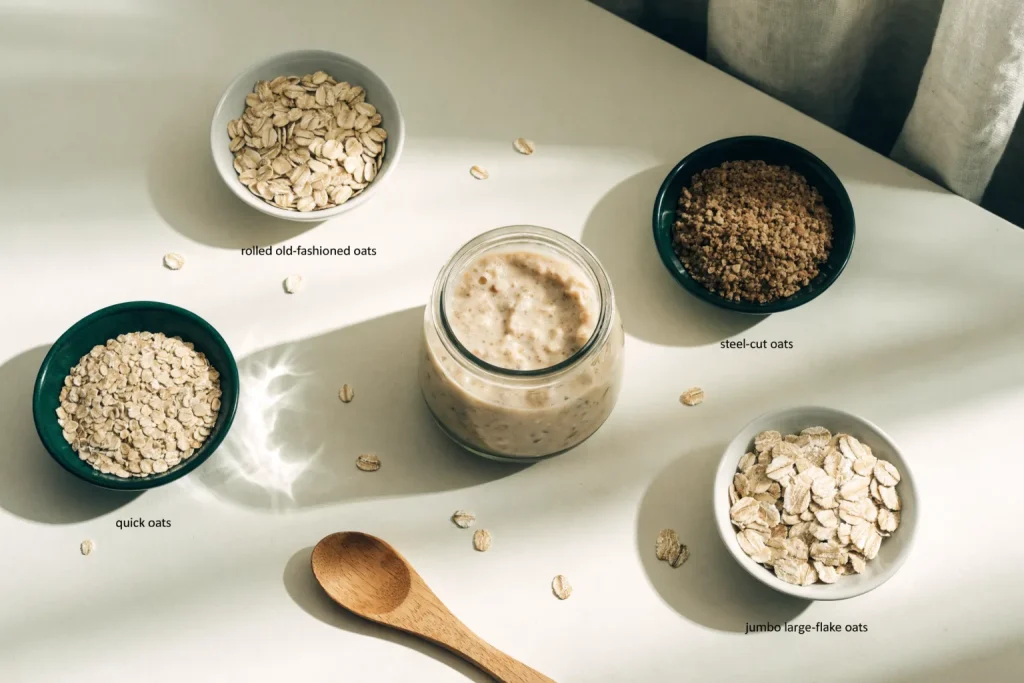
Standing in the cereal aisle wondering which oats to grab? For overnight oats, the answer is simple: rolled oats (also sold as old-fashioned oats) are the best choice, every time. They soak up liquid evenly overnight and hold a soft-but-not-mushy texture that quick oats and steel-cut oats can’t quite match.
But rolled oats aren’t your only option, and in a South African shop the labels don’t always say “rolled.” Here’s exactly what each type of oat does in the jar, whether you can use it, and which local brands to reach for. New to the method? Our how to make overnight oats guide has the master ratio.
Which oats are best for overnight oats?
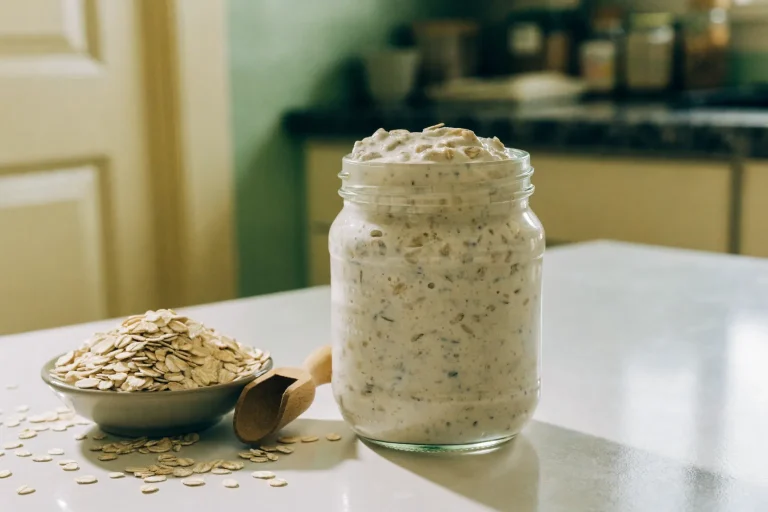
Rolled oats win because of how they’re made. Whole oat groats are steamed and pressed into flat flakes, so they’re thin enough to soften fully in a few hours of cold soaking, but sturdy enough to keep a pleasant chew instead of dissolving into paste. That balance is the whole point of overnight oats, which is why almost every recipe on this site is built on them.
On a South African shelf, look for “rolled oats,” “old-fashioned oats,” or the plain original version of a big brand (Jungle Oats Original, Bokomo, Pick n Pay or Woolworths rolled oats). Avoid anything labelled “instant” or “1-minute” if you want the best texture.
Can you use quick or instant oats for overnight oats?
Yes, but expect a softer, creamier, almost porridge-like result. Quick oats (and instant oats) are just rolled oats cut smaller and pressed thinner so they cook faster — which also means they absorb liquid faster and go mushier overnight. If that’s the texture you like, they work fine. If you want any bite at all, use a little less liquid and eat them within a day or two.
Can you use steel-cut oats for overnight oats?
You can, and some people love them for it — steel-cut oats (oat groats chopped into pieces rather than rolled) stay firm and chewy no matter how long they soak. The trade-off is that a single overnight soak often isn’t enough to soften them fully, so they can taste raw and gritty. To use them well, soak for a full 24–48 hours, add a bit more liquid, and know you’re after a hearty, chewy jar rather than a creamy one.
Nutritionally they’re excellent — steel-cut oats have the same protein and fibre as rolled oats (about 5g protein per 40g serving), just in a less processed, lower-glycaemic form.
Can you use “regular” or large-flake oats?
“Regular oats” usually just means rolled oats — so yes, they’re perfect. Large-flake or jumbo oats are rolled from bigger groats, so they’re thicker and chewier; they work well but may want an extra hour or two of soaking. The one type to skip is raw whole oat groats, which never soften enough to eat cold.
Jungle Oats and South African brands
Jungle Oats is the go-to in most SA kitchens, and it works beautifully for overnight oats. The plain Jungle Oats (the classic tub) are rolled oats — ideal. Jungle Oats also sell a “Quick Cooking” version, which behaves like quick oats above (softer, faster). Bokomo, Pick n Pay, Checkers and Woolworths all sell good-value rolled oats that do exactly the same job.
Are Jungle Oats gluten-free? Oats are naturally gluten-free, but standard Jungle Oats are not certified gluten-free — they’re processed alongside wheat, so they can carry traces of gluten. That’s fine for most people, but if you’re coeliac or gluten-sensitive, choose oats specifically labelled “gluten-free.” See our gluten-free overnight oats recipes for jars built around them.
Oat types at a glance
| Oat type | Texture in the jar | Soak time | Best for |
|---|---|---|---|
| Rolled / old-fashioned | Creamy with a soft chew | Overnight (6h+) | The default — use these |
| Quick / instant | Soft, porridge-like | 2–4 hours | Those who like it creamy |
| Steel-cut | Firm and chewy | 24–48 hours | A hearty, less-processed jar |
| Large-flake / jumbo | Extra chewy | Overnight, a touch longer | More bite |
Whichever oats you use, getting the oats-to-liquid ratio right is what makes or breaks the jar — our measurements and conversions guide has the exact amounts. And if you’re out of an ingredient, our guide to overnight oats without chia, yoghurt or milk covers every swap.
Common questions
What are the best oats for overnight oats?
Rolled oats (also called old-fashioned oats) are the best choice. They soak evenly overnight and keep a soft, creamy texture with a little chew, without turning to mush the way quick oats can or staying gritty like steel-cut oats.
Can you use quick oats for overnight oats?
Yes, but they turn out softer and more porridge-like because they absorb liquid faster. Use slightly less liquid and eat them within a day or two if you want any texture. For the best bite, rolled oats are better.
Can you use steel-cut oats for overnight oats?
Yes, but they stay firm and chewy and need a longer soak — ideally 24 to 48 hours with a bit of extra liquid — or they can taste raw. They’re a great choice if you prefer a hearty, less-processed jar over a creamy one.
Are Jungle Oats gluten-free?
Oats are naturally gluten-free, but standard Jungle Oats are not certified gluten-free because they’re processed alongside wheat and can contain traces of gluten. They’re fine for most people, but coeliacs and gluten-sensitive eaters should choose oats specifically labelled gluten-free.
Can you use regular oats for overnight oats?
Yes — “regular oats” usually means rolled oats, which are exactly what you want. Just avoid raw whole oat groats, which never soften enough to eat cold.
Got your oats sorted? Put them to work: browse all our overnight oats recipes, or join the free 7-Day Overnight Oats Challenge for a proven jar to make every day this week.