Food Safety and Portability
A note before you read. This article uses USDA and CDC food safety rules as the baseline. South African summer temperatures often run hotter than American test conditions, so the rules in this article lean conservative for SA readers. When you doubt the safety of a jar, throw it out. The cost of one breakfast is far less than a day with food poisoning.
You wake up. The jar is in the fridge. You walk out the door. Forty minutes in traffic, eight hours at the office, maybe a meeting that runs long. The question hits before you reach the highway. Will this jar still be safe to eat at eleven?
The answer is more practical than fearful. With the right setup, your overnight oats survive the commute, the desk drawer, and most office mornings without trouble. With the wrong setup, especially in an SA summer, you risk food poisoning. Here is the honest framework.
The short answer. Yes, you can take overnight oats to work without a cooler for short commutes under two hours in moderate temperatures, or under one hour in heat above 32 degrees Celsius. A frozen ice pack against the jar extends the safe window further. For longer days, you need an insulated lunch bag with two cold sources or access to a fridge at work. The science is the same whether you commute in Johannesburg, Cape Town or Bloemfontein.
The Two Hour Rule
The single most important food safety rule for overnight oats applies here. Perishable food made with dairy, yoghurt, or amasi should not sit between 4 degrees Celsius and 60 degrees Celsius for more than two hours total. The United States Department of Agriculture calls this temperature range the danger zone, and bacteria multiply fast inside it.1
The Danger Zone
One critical detail for South African commuters. The two hour rule drops to one hour when the surrounding temperature climbs above 32 degrees Celsius.2 This applies to most of Gauteng, KwaZulu Natal, and the Lowveld between October and March. A jar that sits in the back of a hot car for ninety minutes during a Pretoria summer afternoon has already crossed the safe limit.
Is My Commute Safe?
The three scenarios below cover the most common SA work commutes. Find yours.
Safe, Short Indoor Commute
Less than 45 minutes door to office, kept in a normal work bag, no direct sun exposure, office under 25 degrees Celsius. The jar arrives well within the two hour safety window. No cooler needed.
Caution, Medium Commute or Warm Day
45 minutes to two hours, normal traffic or weather above 25 degrees Celsius. Add one frozen ice pack against the jar inside any bag. Refrigerate immediately on arrival if a fridge is available.
Risky, Long Commute or SA Summer Heat
Over two hours, or any commute in temperatures above 32 degrees Celsius. The jar enters the danger zone before you reach your desk. You need an insulated bag with at least two cold sources or a fridge at the office.
The Five Step No Cooler Method
If your commute falls into the safe or caution categories above, these five steps cover you. Follow them in order.
-
Pre Chill the Jar Hard
Make the oats the night before and refrigerate for at least eight hours. The colder the jar starts, the longer it takes to climb into the danger zone during the commute.
-
Use a Glass Mason Jar
Glass holds its cold for longer than plastic. A 500ml glass mason jar pulled straight from a 4 degree fridge stays below 10 degrees for around 90 minutes at room temperature, far longer than the equivalent plastic container.3
-
Pack It With a Cold Companion
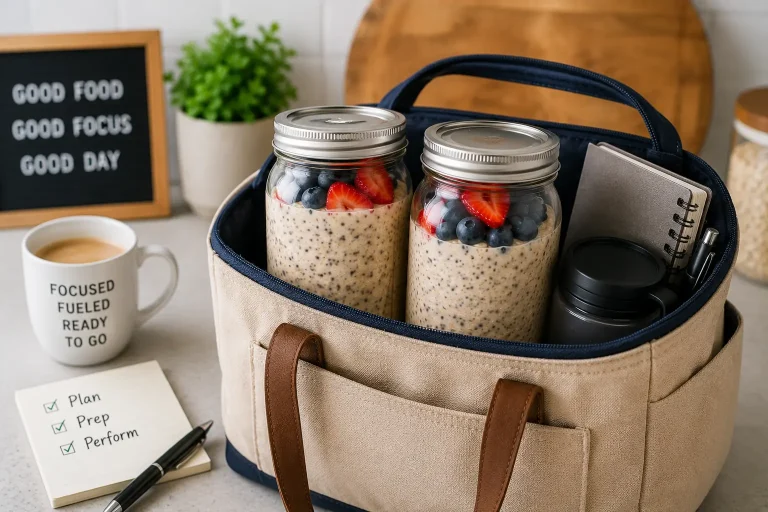
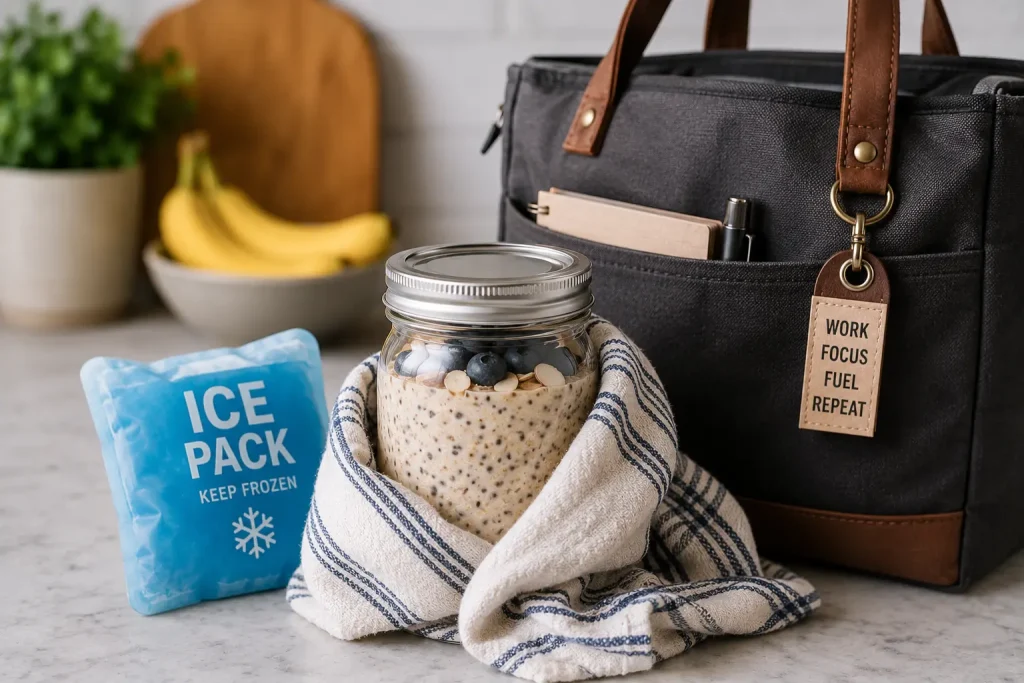
Even without a cooler, you extend the safe window by packing the jar next to something else cold. A frozen water bottle, a frozen juice box, or a small reusable ice pack works. The USDA recommends at least two cold sources for lunches packed without refrigeration.4
-
Wrap and Insulate
Wrap the jar in a clean tea towel, a small piece of bubble wrap, or even a thick sock. This adds a layer of basic insulation. A jar tucked into the centre of a bag stays cooler than one bouncing around against the bag’s outer fabric.
-
Get It Into a Fridge Fast
If your office has a fridge, move the jar in the moment you arrive. This resets the safety clock and gives you complete flexibility on when you eat. Label the jar with your name and the date.
The Hot Car Warning
One scenario deserves its own paragraph because South Africans run into it constantly. Never leave overnight oats in a parked car. The interior of a parked car in the SA sun reaches 40 to 60 degrees Celsius within 30 minutes, even with windows cracked. A jar in the back seat of a car parked at the shops for 20 minutes already sits inside the danger zone.5
If you must transport the jar by car, keep it in the front with you, away from direct sun on the dashboard or passenger seat. An insulated bag with an ice pack handles a short stop. Anything longer than 20 minutes in a hot vehicle and the jar needs to be discarded.
The Five Hacks That Replace a Cooler
Most South African office workers do not own a proper cooler bag. The hacks below cost almost nothing and replace one in practice.
Five Cheap Cold Hacks
- The frozen water bottle. Fill a small 500ml plastic water bottle three quarters full and freeze it overnight. Pack it against the jar in the morning. It thaws as the day goes on and you have cold drinking water at lunch.
- The pre frozen jar method. If you use plant milk, you can freeze the assembled jar overnight and let it thaw during the commute. The frozen mass acts as its own cold source. This does not work with dairy milk, which separates badly on freezing.
- Bubble wrap insulation. Save a piece of bubble wrap from an Amazon or Takealot parcel. Wrap the jar in two layers. Bubble wrap is a surprisingly effective insulator for short commutes.
- The wool sock method. Slide the jar into a thick wool sock before packing. The sock traps the cold air around the jar. A tea towel works too.
- The frozen grape companion. Freeze a small bag of grapes overnight. Pack them in the bag next to the jar. They thaw to a perfect cold snack by mid morning and keep the oats cool until then.
How to Tell If Your Oats Have Gone Off
Sometimes you arrive at the desk unsure whether the jar made it. The signs of spoilage are unmistakable once you know what to look for.
Bin it Signs
- Sour or tangy smell
- Slimy or mucous like texture
- Bubbly or fizzy appearance
- Visible mould of any colour
- Sharp, bitter, or fermented taste
- Grey or yellow discolouration
Still Safe Signs
- Mild oaty smell
- Slight liquid separation on top (normal)
- Thicker texture than the night before
- Original colour intact
- Cool to the touch
- Spoon glides through smoothly
Some liquid separation on the top of the jar is normal after a few hours and does not indicate spoilage. A quick stir brings it back together. Spoilage is about smell, taste and texture, not appearance alone.6 When in doubt, throw it out.
Ingredients That Make Your Jar More Travel Friendly
Some ingredients hold up better on a commute than others. If you regularly take your jar to work, build the recipe around the more stable options.
Plant milks like almond and oat milk are more forgiving than dairy. They still need cold storage but they enter the spoilage zone slightly slower.
Chia seeds and ground flaxseed are stable. They thicken the jar overnight and resist spoilage.
Nut butters are stable. Peanut butter, almond butter, and cashew butter all hold up well at room temperature for hours.
Skip these for commute days. Soft fresh fruit like sliced banana, mango, or strawberries breaks down faster outside the fridge. Add them to the jar in the morning after you arrive at work, not the night before. Cooked egg additions, fresh dairy toppings, and high moisture fruits all shorten the safe window.
The Practical Reality
Most South Africans take overnight oats to work without a cooler every day, and most are fine. The rules above are guardrails, not panic signals. The framework is simple. Keep the jar cold to start. Add one cheap cold source. Move it into a fridge when you arrive if you can. Eat by lunchtime.
Use stricter rules if you are pregnant, immune compromised, feeding a young child, or older. The cost of one bad jar in those situations is far higher than the cost of buying a small insulated lunch bag at a Pick n Pay or Boxer.
The Bottom Line
You can take overnight oats to work without a cooler when your commute is short, the temperature is moderate, and you pair the jar with at least one cold source. The USDA two hour rule, or one hour above 32 degrees Celsius, sets the limit. For SA summer days and long commutes, an insulated bag with two cold sources or a fridge at work is the safer route. Glass jars, frozen water bottles, and a tea towel wrap will carry you through most working days for free.
Frequently Asked Questions
Can I take overnight oats to work without a cooler?
Yes, for short commutes of under two hours in moderate temperatures, and under one hour in temperatures above 32 degrees Celsius. Pair the jar with a frozen ice pack and keep it out of direct sun. For commutes longer than two hours or hot SA summer days, you need an insulated bag with two cold sources to stay within USDA food safety limits.
How long can overnight oats sit at room temperature?
The USDA’s two hour rule applies. Perishable food made with dairy or yoghurt should not sit between 4 and 60 degrees Celsius for more than two hours total. If the temperature climbs above 32 degrees Celsius, the safe limit drops to one hour. After that, harmful bacteria multiply fast and the oats should be discarded.
Do overnight oats need to be kept cold during a commute?
Yes when made with dairy milk, yoghurt, or amasi. These ingredients are perishable and the wet oat mixture creates a perfect environment for bacterial growth above 4 degrees Celsius. A frozen ice pack against the jar in any insulated bag extends the safe window past two hours. Plant milks like almond and oat milk are slightly more forgiving but still need cold storage when mixed with the soaked oats.
Will overnight oats spoil in a hot car?
Yes. A car interior can reach 40 to 60 degrees Celsius on a warm SA summer day, well inside the bacterial growth danger zone. Never leave overnight oats in a parked car for more than a few minutes. If you must leave the jar in the car, use an insulated bag with at least one frozen ice pack and park in shade.
Can I refrigerate my overnight oats at work?
Yes, and this is the best solution. If your office has a fridge, transfer the jar straight from your bag to the fridge as soon as you arrive. This resets the safety clock and gives you flexibility around lunchtime eating. Label the jar with your name and the date you prepared it.
References
- USDA Food Safety and Inspection Service. Danger Zone, 40°F to 140°F. fsis.usda.gov
- USDA Food Safety and Inspection Service. Keeping Bag Lunches Safe. fsis.usda.gov
- KimEcopak. How Long Does Overnight Oats Last, Glass Versus Plastic Storage Comparison. kimecopak.ca
- USDA. Use an Insulated Lunch Bag to Keep Meals Safe, Two Cold Sources Recommendation. usda.gov
- FoodEzy. Can I Leave Food In A Hot Car, Safe Time Limits. foodezy.net
- North Carolina Cooperative Extension, Brunswick County. Overnight Oatmeal Safety. brunswick.ces.ncsu.edu