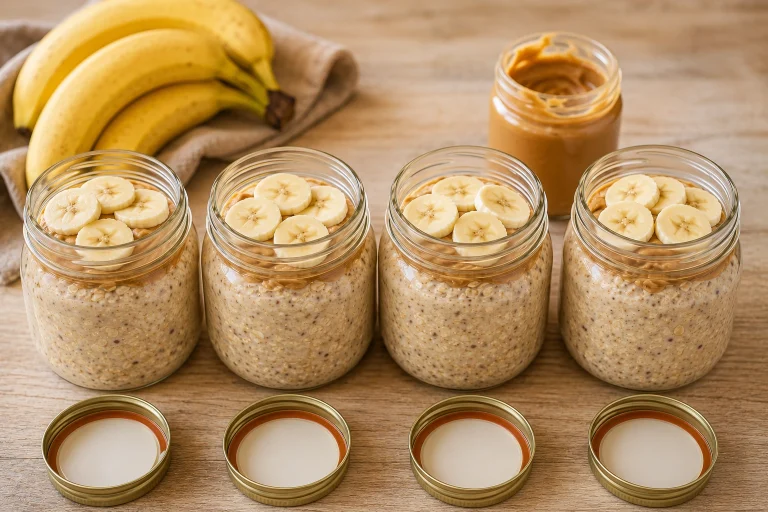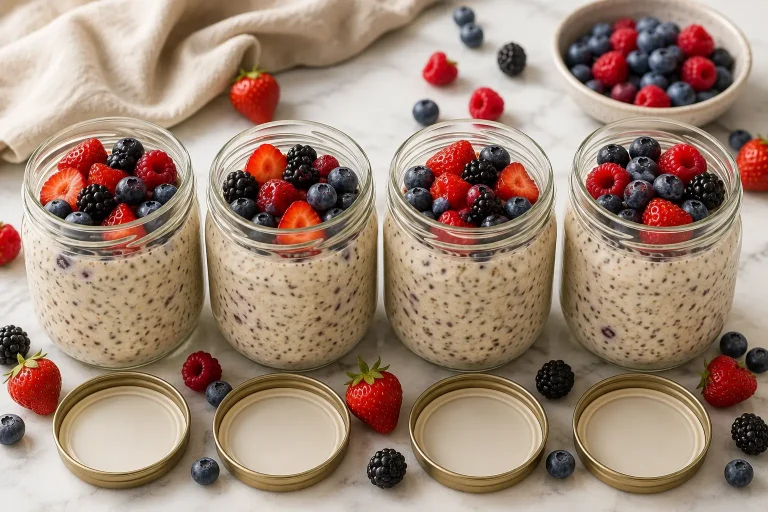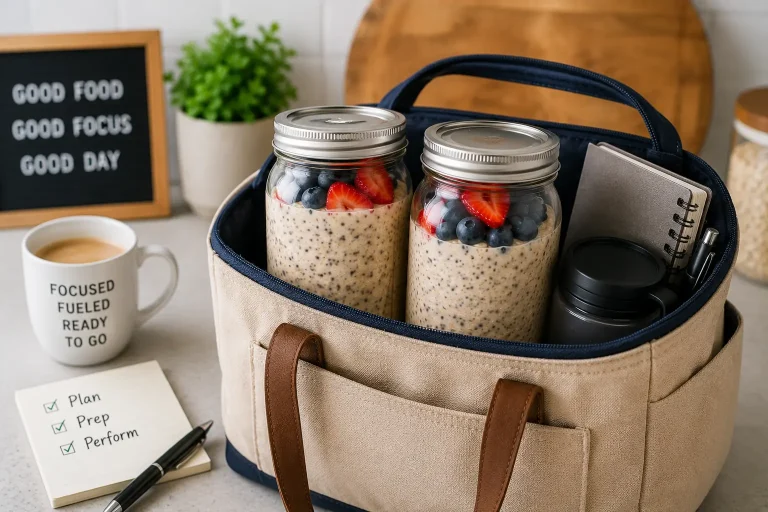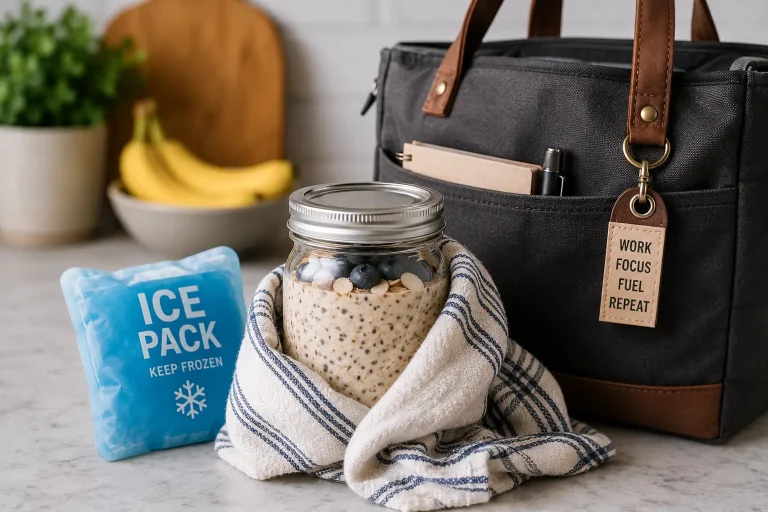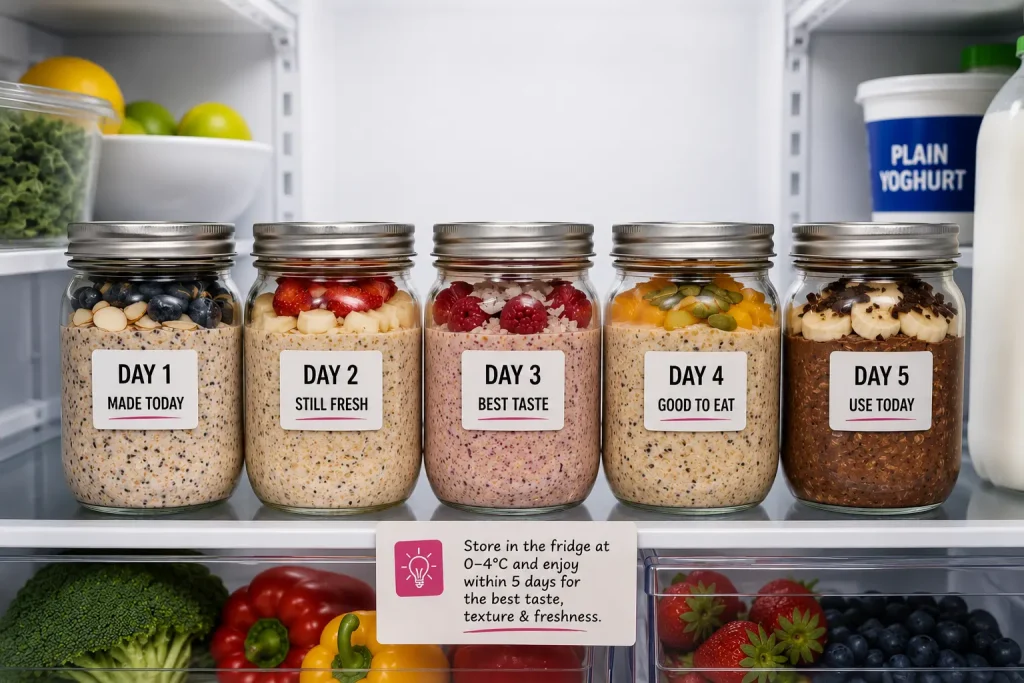
Sunday batch prep. Five jars. Five mornings sorted. You open the fridge on Thursday and wonder whether the jar at the back is still good.
Here is the definitive answer and everything that determines whether your overnight oats last two days or five.
The Short Answer
Overnight oats typically last 3 to 5 days in the fridge when stored in an airtight container. Their ideal flavour and texture are best within the first 1 to 3 days.
That window makes Sunday evening batch prep the obvious strategy. Make five jars. Eat them Monday through Friday. Every jar is within the safe and fresh window.
But the full picture is more specific than a single number. The ingredients you use, the container you choose, your fridge temperature and how you handle toppings all shift that window meaningfully. Here is exactly how.
What Determines How Long Your Oats Last
Your liquid choice matters most
Dairy milk and yoghurt have a higher protein and fat content than water, which means they tend to spoil faster. You are best enjoying the oats within the first two days, three at the most, when using dairy milk as your base liquid. Plant-based milks, including almond milk, oat milk, soy milk and coconut milk from a carton, generally have a longer refrigerator shelf life because they are often pasteurised at a higher temperature. This helps your oats last three to four days, making plant-based milk a better option when making a larger batch. CUH
In practical SA terms: jars made with full cream milk from Clover or Parmalat are best consumed by Wednesday if made on Sunday. Jars made with Woolworths oat milk or unsweetened almond milk stay fresh and pleasant through to Friday.
Fresh fruit toppings shorten the window significantly
If your recipe includes fresh fruit like berries or banana slices, reduce the storage window to 1 to 2 days to avoid excess moisture and faster spoilage. nih
This is the most common batch prep mistake. Sliced banana turns brown and releases liquid that makes the base watery by day two. Fresh strawberries go soft and mushy. Fresh mango breaks down quickly and changes the flavour of the entire jar.
The fix is simple. Store fresh fruit separately and add it in the morning. Everything else in the base keeps for the full 3 to 5 day window. Frozen fruit added to the base is the exception it releases liquid slowly and holds up better than fresh for multi-day storage.
Your container makes a real difference
In glass jars, overnight oats often last up to 5 days under proper refrigeration. Glass is non-porous and does not absorb odours or stains, which helps maintain freshness. In plastic containers, overnight oats generally last about 3 to 4 days. A tight-fitting lid is essential to maintain shelf life regardless of container type. WebMD
Wide-mouth glass mason jars with screw-top lids are the best choice for overnight oats storage. They seal tightly, do not absorb flavours from previous batches, are easy to clean, and stack efficiently in a South African fridge. Pick n Pay, Woolworths, Checkers and Takealot all stock suitable options at R25 to R60 each. Buy five and your batch prep system is complete.
Fridge temperature determines safety
Store your oats at the back of the fridge, which is typically the coolest spot. A temperature of 4°C or below is ideal for food safety. CUH
Most South African fridges run at 3°C to 5°C. The door shelves are consistently warmer due to repeated opening and closing. Keep your overnight oats on the middle or lower back shelves, not on the door.
If left at room temperature for too long, even just a few hours, oatmeal can become a breeding ground for bacteria, which reduces its safety and quality. After making your jars, refrigerate them immediately. Do not leave them on the counter while you finish tidying the kitchen. UMass Chan Medical School
Ingredient hygiene at prep time
Start with fresh ingredients. Check your milk and yoghurt expiration dates before using. Use clean utensils and containers. Label each jar with its preparation date clearly on the lid or side. nih
A jar made with yoghurt that expires tomorrow will not last five days. Check dates before every batch. Use clean spoons. Rinse your jars thoroughly between batches. These basics determine whether your Thursday jar is safe or not.
The Day-by-Day Reality
Here is what actually happens to your overnight oats jar over five days in a properly cold fridge:
| Day | Texture | Flavour | Safety | Verdict |
|---|---|---|---|---|
| Day 1 (next morning) | Creamy, thick, oats hold shape | Fresh, ingredients distinct | Excellent | Best jar of the batch |
| Day 2 | Still thick, slightly softer | Very good, slight meld of flavours | Excellent | Excellent eating |
| Day 3 | Noticeably softer, more uniform | Good, flavours fully merged | Good | Still enjoyable |
| Day 4 | Soft, beginning to become mushy | Okay, less distinct | Acceptable | Eat today or discard |
| Day 5 | Mushy texture, may be watery | Acceptable at best | Check before eating | Apply spoilage test |
The biggest trade-off is not safety it is enjoyment. While many batches remain technically safe for five days, few retain peak appeal beyond three. Texture changes are inevitable: oats continue absorbing liquid, becoming softer, then mushier, and occasionally developing a faintly slimy mouthfeel. nih
Make five jars and plan to eat them in order. Monday and Tuesday are the best jars. Thursday and Friday are still safe but require a spoilage check first.
How to Know When Your Overnight Oats Have Gone Bad
Your senses are reliable here. Apply this three-point check before eating any jar that has been in the fridge for three days or more.
The smell test
Overnight oats should smell fresh and should not have a sour smell. Open the jar and smell it directly. A fresh jar of overnight oats smells neutral, slightly sweet and milky. A spoiled jar smells sour, fermented or off. If you notice any sourness or a smell that makes you hesitate, discard it. Do not taste it to check. CUH
The visual test
The texture should be thick and creamy with the oats still holding their shape. Discoloration or mould growth is a clear sign that the oats are no longer safe to eat. CUH
Any pink, green or fuzzy growth on the surface means the jar goes in the bin immediately. Discolouration around the edges, excessive liquid separation with a watery grey tinge, or a slimy film on the surface are all signs of spoilage.
Slight liquid separation where the milk sits above the oats is normal and not a spoilage sign simply stir it back in.
The texture test
A jar that has gone bad often develops an unpleasantly slimy or gluey texture that differs from the natural softening that happens over days. If the texture feels wrong rather than just soft, trust that instinct.
Signs that your overnight oats are no longer safe to eat include an unpleasant or sour odour, mould or unusual discolouration, and a slimy or off-putting texture. When in doubt, throw it out.
Storage Tips That Extend Freshness
Keep toppings separate
The single most effective way to extend the enjoyable life of your overnight oats batch is keeping all fresh toppings out of the jar until morning. Banana, strawberries, mango, granola and chopped nuts all belong in a separate small container, added fresh each morning. The oat base stays fresher, the toppings stay at their best, and every jar tastes like it was just made.
Add chia seeds to your base
To store your overnight oats for a more extended period, use ingredients like chia seeds, almonds or dried fruits that do not become mushy when stored in the refrigerator for several days. UMass Chan Medical School
Chia seeds actually improve as they soak. By day three they have fully hydrated and contribute to a thicker, creamier texture rather than a deteriorating one. They are one of the best ingredients for batch prep storage because they hold up across the full five-day window.
Label every jar
Write the preparation date on a small piece of masking tape on the lid of each jar. When you reach into the fridge on Thursday morning you know immediately whether the jar is day four or day five. This removes any guesswork and prevents food waste from uncertainty.
Store at the back of the fridge
The back of your fridge maintains a consistent temperature significantly better than the front or the door. Overnight oats kept at the back last longer than those stored near the door where temperature fluctuates every time the fridge opens.
Use a large enough jar
Overnight oats expand as they absorb liquid. A jar filled to the very top will overflow slightly and the lid will not seal properly. Use a 500ml wide-mouth jar for a standard half-cup oats recipe. This gives the oats room to swell and still leaves space for morning toppings.
Can You Freeze Overnight Oats?
Yes, but with limitations.
Overnight oats can be frozen to extend their shelf life significantly beyond the fridge window. Freeze in individual portion-sized airtight containers. Thaw in the fridge overnight when ready to eat.
In practice, freezing changes the texture of overnight oats noticeably. The oats become softer after thawing, and dairy-based jars can separate and become watery. Frozen overnight oats work best as a base that you stir and add fresh toppings to after thawing rather than eating straight from the container.
Freeze without fresh fruit, yoghurt-based toppings or granola. The oat and milk base freezes reasonably well. Everything else is better added fresh after thawing.
The SA Batch Prep System That Works
This is the storage setup that most South African overnight oats enthusiasts settle into after a few weeks:
Sunday evening: Make 4 jars. Prepare the oat and liquid base only. No fresh fruit in the jar. Label each jar Monday through Thursday. Refrigerate immediately at the back of the fridge.
Toppings: Keep one small container of fresh fruit in the fridge. Add that morning’s fruit to the jar before eating.
Monday and Tuesday jars: Eat these with whatever toppings you like. Peak freshness.
Wednesday jar: Still excellent. Apply the smell and visual check out of habit.
Thursday jar: Apply the full three-point spoilage check. Still safe in the majority of cases when stored correctly.
Friday: If you want a fifth morning covered, make a fresh jar on Thursday evening rather than storing a jar from Sunday. A fresh jar always beats a five-day-old jar.
This system gives you four mornings of zero-effort breakfasts, peak freshness on every jar you eat, and no food waste from uncertainty.
The Bottom Line
Make your batch on Sunday. Use glass jars with tight-fitting lids. Store at the back of the fridge. Keep fresh fruit separate. Add toppings in the morning. Label every jar with the date.
Do that and your overnight oats stay fresh, safe and genuinely enjoyable through to Thursday. Four mornings of ready-made breakfast for twenty minutes of Sunday evening effort.
That is the system. Tonight is the best time to start it.
New to overnight oats? Our Complete Beginner’s Guide covers the master ratio, step-by-step method and your first five SA recipes. Or start our free 7-Day Overnight Oats Challenge and receive one new recipe directly to your inbox every morning for a week.
Sources referenced in this article include food safety and storage guides from Dozy Oats, 3 Bears overnight oats, KimEcopak food packaging and storage guides, Oats My Goodness, Proper Good nutrition, and fridge.com food safety resources.
Overnight oats storage questions
How long do overnight oats last in the fridge?
Overnight oats last up to five days in a sealed jar in the fridge. The texture is best on days one to three. Store the oats plain and add fresh fruit, nuts or granola just before you eat so the toppings stay crisp.
Can you freeze overnight oats?
Yes. Freeze them in a sealed container for up to three months. Move the jar to the fridge the night before and let it thaw slowly, then stir well and add fresh toppings in the morning.
How can you tell if overnight oats have gone off?
Throw them out if you see mould, smell a sour or yeasty smell, notice a slimy texture or see any fizzing. Normal overnight oats smell mildly tangy from the yoghurt. Anything sharper than that means they have turned.
Do overnight oats need to be refrigerated?
Yes. Overnight oats contain milk or yoghurt and soak cold, so they are not shelf stable. Keep them in the fridge from the moment you make them and never leave a jar at room temperature for more than two hours.
How long do overnight oats made with amasi or double cream yoghurt last?
They last up to five days, as long as that falls within the use by date on your amasi or yoghurt. Amasi is already cultured, so it holds up well, but check the date on the tub before you batch a full week of jars.
Can you eat overnight oats after five days?
Five days is the safe limit for most jars. After that the texture turns gluey and the spoilage risk climbs, so make a fresh batch rather than pushing it.
The Bottom Line
Make your batch on Sunday. Use glass jars with tight-fitting lids. Store at the back of the fridge. Keep fresh fruit separate. Add toppings in the morning. Label every jar with the date.
Do that and your overnight oats stay fresh, safe and genuinely enjoyable through to Thursday. Four mornings of ready-made breakfast for twenty minutes of Sunday evening effort.
That is the system. Tonight is the best time to start it.
New to overnight oats? Our Complete Beginner’s Guide covers the master ratio, step-by-step method and your first five SA recipes. Or start our free 7-Day Overnight Oats Challenge and receive one new recipe directly to your inbox every morning for a week.
Sources referenced in this article include food safety and storage guides from Dozy Oats, 3 Bears overnight oats, KimEcopak food packaging and storage guides, Oats My Goodness, Proper Good nutrition, and fridge.com food safety resources.