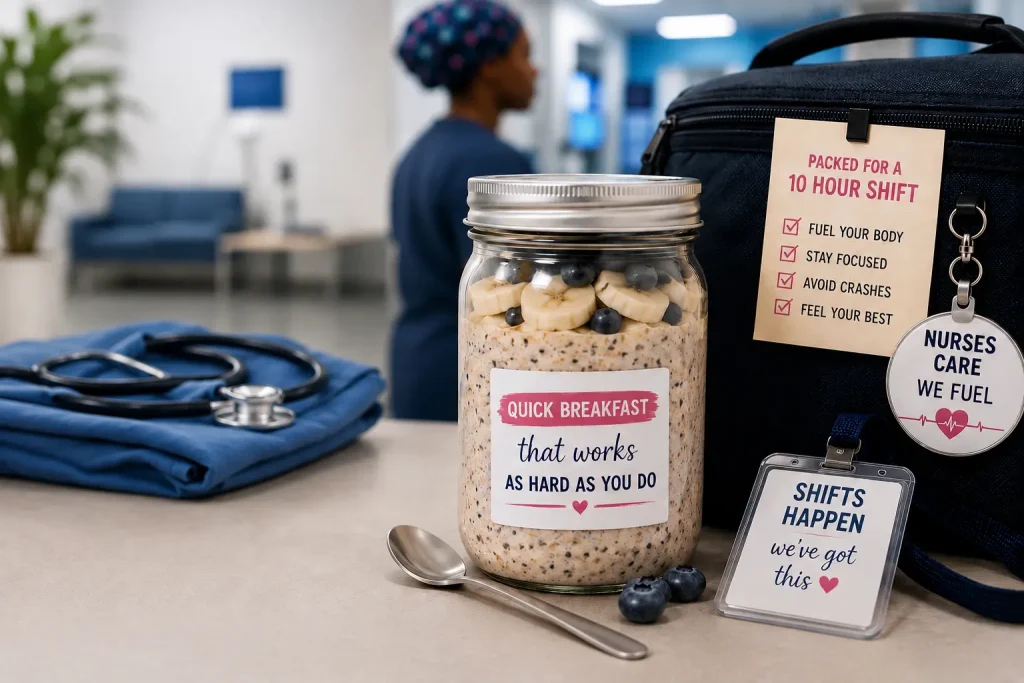
Your alarm goes off at 5am. You have a 10-hour shift starting in 90 minutes. The fridge is there. The clock is moving. And whatever you eat in the next 20 minutes will either carry you through to 4pm or leave you crashing by 10am, hungry by noon, and running on vending machine chips and bad coffee by 2pm.
This is the real breakfast problem for South African shift workers. Not what tastes good. What lasts.
Nurses. Security guards. Factory floor workers. Retail staff. Teachers on their feet all day. Petrol station attendants. Warehouse workers. Millions of South Africans start a 10-hour shift every single morning, and the breakfast they eat before that shift determines how the entire day goes.
Here is what the evidence says about the options, and why one breakfast consistently wins.
Why Breakfast Matters More on a Long Shift
Before the comparison, understand the stakes.
Food choices and timing directly influence energy levels, metabolism, and cravings throughout a long shift. Workers should prioritise meals that are easy to digest and low in sugar to avoid energy crashes. High-sugar and high-fat foods lead directly to the energy crashes that make long shifts feel impossible. WebMD
Quick Breakfast Ideas for 10-Hour Shifts: The Full Comparison
Option 1: Eggs on toast
Prep time: 10 to 15 minutes (morning) Protein: 14 to 18 grams Fibre: 2 to 4 grams Satiety window: 2 to 3 hours
Eggs are genuinely nutritious. Two eggs on two slices of brown toast delivers solid protein and a reasonable calorie count. The problem is fibre. Brown toast and eggs together deliver around 2 to 4 grams of fibre, well below what a 10-hour shift demands for sustained satiety. You will be hungry again by 10am. Add avocado and you push the fibre and healthy fat content up meaningfully, but now you are at 20 minutes of morning prep time and a more expensive plate.
The other problem is the morning cooking requirement. At 5am before a long shift, standing at a stove is a real friction point. If you skip it because you are tired, you eat nothing. Eating nothing is worse than any other option on this list.
Option 2: Breakfast cereal
Prep time: 3 minutes (morning) Protein: 3 to 8 grams Fibre: 1 to 4 grams Satiety window: 60 to 90 minutes
Fast. Convenient. Widely available. And for most popular South African brands, nutritionally inadequate for a long shift in almost every meaningful way.
A 30 gram serving of Coco Pops delivers 9.9 grams of sugar, 1.5 grams of protein and 0.5 grams of fibre. That is a blood sugar spike followed by a crash before 8am. Weet-Bix and Corn Flakes perform better, but even they sit below 4 grams of protein and 3 grams of fibre per serving. You need to add milk, yoghurt and fruit to get anywhere close to the protein and fibre target for a 10-hour shift, at which point you are no longer eating a quick cereal breakfast.
Verdict: Poor protein. Poor fibre. Blood sugar crash guaranteed on popular SA brands.
Verdict: Good nutrition. Poor meal prep convenience. Low fibre for a 10-hour shift.
Meal prepping involves planning and cooking meals ahead of time for the next few days. It is effective for promoting healthy eating when you find yourself dashing out the door before your shift, skipping meals on the job, or opting for those convenient but nutrient-poor vending machine snacks. UMass Chan Medical School
The two nutrients that determine whether your breakfast lasts four hours or ninety minutes are protein and fibre.
Try prepping meals high in protein, fibre and complex carbohydrates. These nutrients keep you full. Carbohydrates are your body’s preferred source of energy, so eating a balanced meal packed with whole grains, fruits or vegetables helps fight off any post-meal sluggishness. A 2019 review found that fibre produces satiety-inducing effects, which can help curb appetite and provide the energy needed to power through the rest of a shift. UMass Chan Medical School
Your breakfast before a 10-hour shift needs at least 15 to 20 grams of protein, at least 7 grams of fibre, and complex carbohydrates that release glucose slowly rather than all at once. Every option below gets measured against that standard
Option 3: Yoghurt and fruit
Prep time: 3 minutes (morning) Protein: 8 to 12 grams Fibre: 3 to 5 grams Satiety window: 2 hours
A solid nutritional choice that falls short on three fronts for shift workers. The protein is good if you use Greek yoghurt, but standard yoghurts deliver much less. The fibre depends entirely on what fruit you add. And the satiety window is too narrow for a 10-hour shift. You will eat this at 5:30am and be hungry again before your first break at 9am.
It is also not particularly portable or prep-friendly in large batches. A container of yoghurt and a banana works in the moment but does not solve Monday through Friday.
Verdict: Decent breakfast. Not a 10-hour shift breakfast without significant additions..
Option 4: Peanut butter toast or banana
Prep time: 3 minutes (morning) Protein: 8 to 10 grams Fibre: 4 to 6 grams Satiety window: 2 to 2.5 hours
Natural peanut butter on brown bread with a banana is a solid, affordable SA option that millions of people already eat. The combination of healthy fat, protein and complex carbohydrates from the banana produces decent satiety. For a 6-hour shift it works reasonably well. For a 10-hour shift, you need more protein and more fibre to carry you through without a significant energy dip.
The meal also requires morning assembly, which is a minor inconvenience on a 5am start but a real barrier when you are exhausted, running late, or woke up too late to cook.
Verdict: Affordable and nutritious. Insufficient protein and fibre for a full 10-hour shift.
Option 5: Overnight oats
Prep time: 5 minutes (the night before) + 0 minutes in the morning Protein: 14 to 30 grams (depending on add-ins) Fibre: 7 to 12 grams Satiety window: 3 to 4 hours
This is the one. Here is why, specifically.
Oatmeal checks every box as a sustaining pre-shift meal. The complex carbohydrates provide sustained energy, the fibre keeps blood sugar stable, and the texture is substantial rather than heavy. Overnight oats prepared the night before are ready to eat cold or quickly warmed, making early-morning eating significantly easier to manage. nih
Rolled oats soaked overnight with milk, chia seeds and peanut butter deliver over 20 grams of protein to keep you energised through the morning. The chia adds fibre, antioxidants and omega-3 fats. Showit Blog
Preparing snacks and meals in advance, including overnight oats, makes it significantly easier to stay consistent with healthy eating on a long shift. The jar is portable, requires no heating and fits into a work bag.
The structure of overnight oats solves every practical problem a shift worker faces at 5am simultaneously.
Verdict: Best protein per rand. Best fibre. Best satiety window. Zero morning effort.
Why Overnight Oats Beat Every Other Option for Shift Workers
The maths of a 10-hour shift
A 10-hour shift from 6am to 4pm requires energy across three distinct windows: the morning push (6am to 10am), the mid-shift grind (10am to 1pm), and the home stretch (1pm to 4pm). Your breakfast handles the first window and sets the foundation for the second.
A breakfast with less than 15 grams of protein and less than 6 grams of fibre will not carry you reliably through the first four hours. Overnight oats built with Greek yoghurt, chia seeds and Jungle Oats delivers both in a single jar.
You prepare it when you have energy, not when you are exhausted
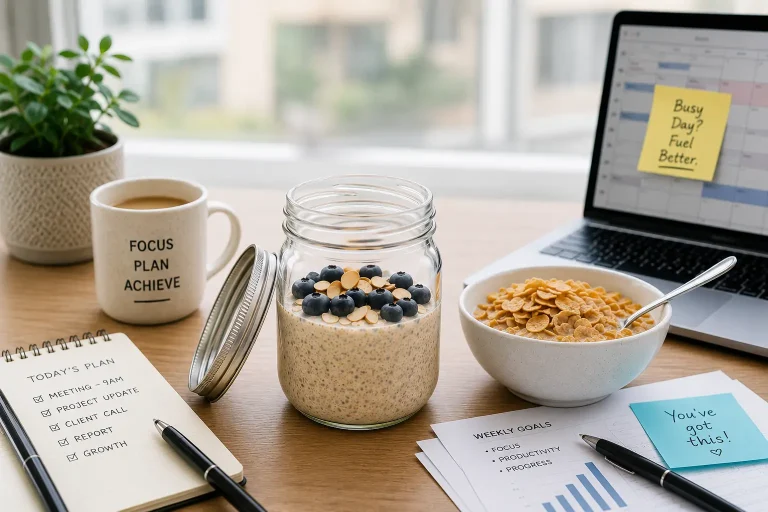
The most important practical advantage of overnight oats for shift workers is invisible in a nutrition comparison table. You make it the night before, when the shift is over and you have five free minutes in the kitchen. You do not make it at 5am when you are groggy, rushed, possibly still slightly exhausted, and the last thing you want to do is cook.
Pre-preparing meals saves time and prevents reliance on vending machines or fast food. Portable food containers keep meals fresh and allow for on-the-go consumption. WebMD
The jar sits in the fridge. You grab it. You leave. Breakfast is done before you lock the front door.
You can eat it during the shift if needed
Unlike hot food, eggs or toast, overnight oats travel in a sealed jar and stay fresh for up to five days in the fridge. If you start your shift too early to eat, take the jar to work and eat it during your first break at your locker, in the break room or in your car. The jar does not need reheating. It does not smell. It does not require cutlery beyond a spoon.
It solves Sunday meal prep for the entire week
Incorporating meal prep before a stretch of shifts saves time, stress and money, and ensures you make healthier choices during the week. nih
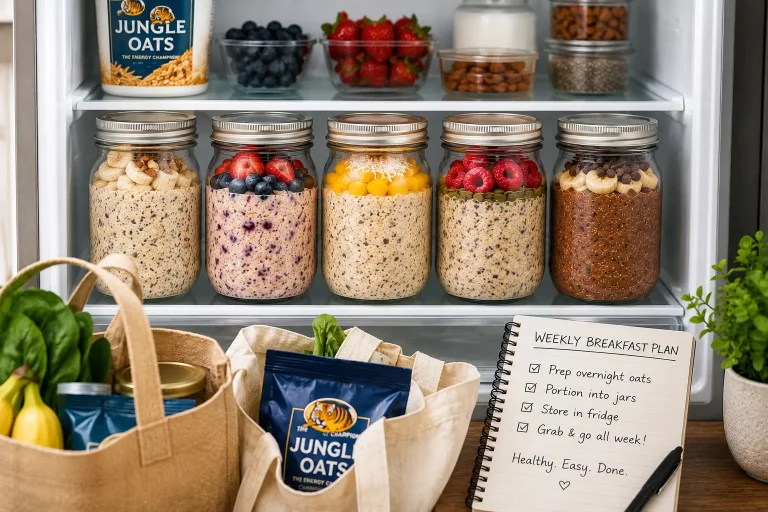
Make five jars on Sunday. Twenty minutes. Five mornings of breakfast sorted. Monday through Friday, you open the fridge, grab a jar and walk out. No decisions, no cooking, no morning stress, no skipped breakfast because you ran out of time.
This is the system that makes the nutrition sustainable long-term. Not a single good breakfast choice on a Monday, but five consecutive mornings of the same quality.
Five SA Overnight Oats Jars Built for Shift Workers
All five use the master ratio of half a cup of Jungle Oats, half a cup of liquid and a quarter cup of Greek yoghurt. All are under R28 a jar using ingredients from Pick n Pay, Woolworths or Checkers. All take five minutes to make the night before.
Jar 1: High Protein Power (30g protein)
Combine half a cup of Jungle Oats, half a cup of full cream milk, half a cup of plain Greek yoghurt, one tablespoon of chia seeds, one tablespoon of natural peanut butter, one teaspoon of raw honey and a pinch of salt. Refrigerate overnight. Top with fresh berries and a peanut butter drizzle. This is the jar for anyone doing physical work on their shift.
Jar 2: Rooibos and Honey (caffeine-free)
Replace the milk with half a cup of brewed Rooibos tea, cooled completely. Add one and a half teaspoons of raw SA honey, a quarter cup of plain yoghurt and a pinch of cinnamon. No caffeine spike and no caffeine crash mid-shift. Particularly useful for night shift workers who need to sleep when they get home.
Jar 3: Banana and Peanut Butter (budget option under R18)
Combine half a cup of Jungle Oats, half a cup of full cream milk, a quarter cup of plain yoghurt, one mashed overripe banana, one tablespoon of natural peanut butter and a quarter teaspoon of cinnamon. This is the most affordable jar on the list and one of the most satisfying.
Jar 4: Mango and Coconut (for the summer shift)
Use half a cup of full-fat tinned coconut milk as the liquid. Add half a cup of diced frozen mango, one teaspoon of maple syrup and a pinch of cardamom. Refrigerate overnight. Takes the same five minutes but feels like a completely different breakfast by Wednesday. Variety keeps the habit alive through long shift rotations.
Jar 5: Koeksister-Inspired (the SA morale boost)
Add one tablespoon of apricot jam, half a teaspoon of cinnamon, a quarter teaspoon of cardamom and a tablespoon of desiccated coconut to the base. Refrigerate overnight. This is the jar that makes Thursday morning feel like something to look forward to rather than just another early start.
The Shift Worker Breakfast Checklist
Before you commit to any breakfast option for your work week, measure it against these four questions:
Can you prepare it the night before? If the answer is no, you are adding a morning task to a 5am routine. That task will be skipped on the hard mornings.
Does it deliver at least 15 grams of protein? Below 15 grams and you will be hungry before your first break.
Does it deliver at least 7 grams of fibre? Below 7 grams and your blood sugar will peak and drop before mid-morning.
Does it cost under R30? Long shift workers in South Africa need a breakfast that is sustainable on a real budget every single weekday.
Overnight oats built with Greek yoghurt, chia seeds and Jungle Oats answer yes to all four questions. Nothing else on this list does.
Make tonight’s jar. Read our complete Beginner’s Guide for the master ratio, step-by-step method, troubleshooting and your first five SA recipes. Or start our free 7-Day Overnight Oats Challenge and get one new recipe delivered to your inbox every morning for a week.
Sources referenced in this article include Healthline’s dietary guide for shift workers (September 2024), Trusted Health’s nutrition guide for 12-hour shifts, Parim Workforce Software’s night shift meal plan, Huel’s night shift nutrition guide, Berry Street Registered Dietitian high-protein meal plan research, and Clean Eatz Kitchen’s evidence-based pre-performance nutrition analysis.
Common questions
What is the best breakfast before a 10-hour shift?
The best breakfast before a 10-hour shift is high in protein (15 to 25 grams), high in fibre (7 to 12 grams) and built from complex carbohydrates that release energy slowly. Overnight oats prepared the night before meets all three criteria, requires zero morning effort, costs under R25 and is portable enough to eat during your first break if your shift starts before you have time to eat at home.
How do I stop getting hungry during a long shift?
Protein and fibre are the two nutrients that most effectively control hunger during a long shift. A 2019 review found that fibre produces satiety-inducing effects that can curb appetite and provide sustained energy. Eating a meal high in both before your shift is significantly more effective than relying on snacks throughout the day. UMass Chan Medical School
Start with a high-protein, high-fibre breakfast. Pack a protein-rich snack (boiled eggs, nuts, or a nut butter sachet) for mid-shift. Drink water consistently throughout.
Can I eat overnight oats cold at work?
Yes. Cold overnight oats straight from the jar is how most people eat them. The texture is thick, creamy and completely satisfying cold. You do not need to heat them. They travel well in a sealed mason jar, require no preparation at work, and can be eaten at a locker, in a break room or in a car park between tasks.
How much does a breakfast overnight oats jar cost in South Africa?
A standard overnight oats jar using Jungle Oats, full cream milk and Clover Greek yoghurt costs between R14 and R22 depending on toppings and add-ins. Adding chia seeds and natural peanut butter brings the cost to approximately R22 to R28. Five jars prepared on Sunday costs between R70 and R140 for the full work week’s breakfast.
How long do overnight oats last in the fridge?
Overnight oats last 3 to 5 days in a sealed glass jar stored at the back of the fridge. This makes Sunday batch prep viable for the full Monday to Friday shift week. Fresh fruit toppings should be stored separately and added each morning to maintain freshness and prevent the base becoming watery.