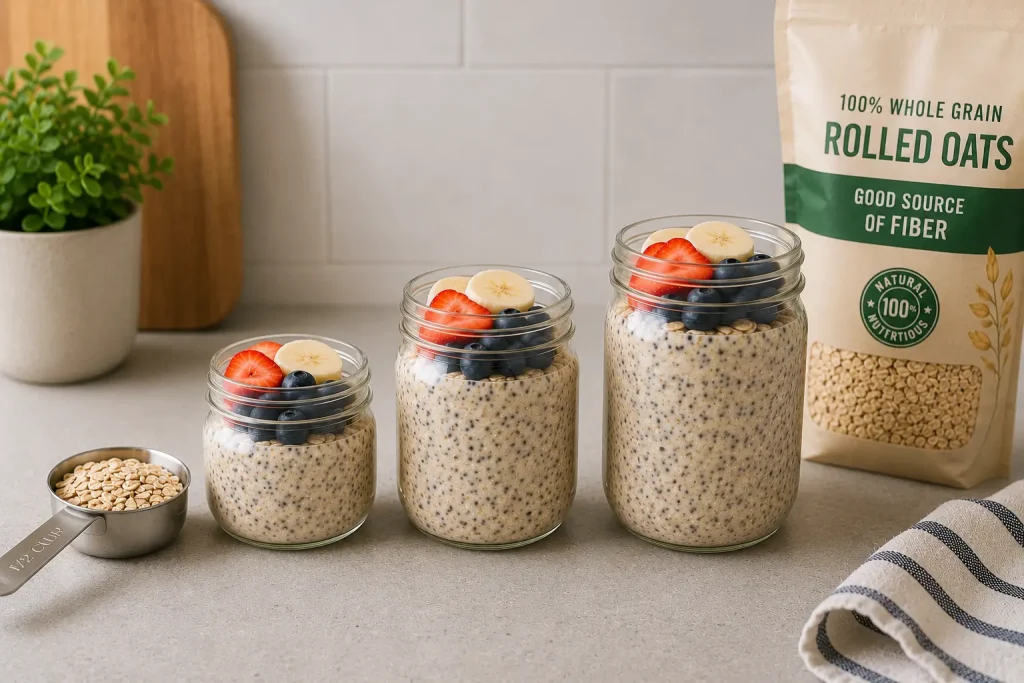
Portion Sizes and Nutrition
You make the jar. The recipe says one serving. But what does one serving actually mean? A third of a cup of oats feels too small. A full cup looks too big. The amount that holds you to lunch is different from the amount that fits your jar nicely on Instagram. The right portion sits somewhere in between, and it changes with your goal.
The honest answer cuts through the confusion most recipe blogs leave you with. There is a baseline that works for most adults, three goal based portions that scale up or down from the baseline, and one common calorie trap that catches almost everyone who builds an overnight oats jar by eye.
The short answer. Half a cup (40 to 50 grams) of dry rolled oats is the standard adult breakfast portion. This expands to about one cup of prepared oats during soaking. Scale up to three quarters of a cup if you are active or building muscle. Scale down to a third of a cup for weight loss or smaller appetites. The toppings around the oats matter just as much as the oats themselves.
The Baseline Portion
Almost every registered dietitian and oat industry guide lands on the same baseline portion for adults.
The Standard Adult Serving
Expands to roughly 1 cup of prepared oats after soaking. Provides about 150 calories from the oats alone, with 5 grams of protein and 4 grams of fibre.1
The half cup measurement works for three reasons. It fits comfortably in a 470 millilitre mason jar with room for milk, yoghurt, and toppings. It absorbs liquid at the ideal one to one and a half ratio for firm creamy texture. And it lands at roughly 150 calories before additions, which suits most balanced breakfast plans.2
Adjusting the Portion to Your Goal
The baseline works for most people, but a portion that suits a sedentary office worker is not the same as the portion that suits a construction worker, a marathon runner, or someone trying to lose weight. Use the four goal based portions below to find yours.
Weight Loss
Maintenance
Active or Muscle Gain
Endurance Athletes
One important note. These portions are starting points. Track your hunger for three days at each portion. If you reach lunch hungry but not desperate, the portion is right. If you fight off snacks at ten in the morning, increase by a tablespoon. If you feel uncomfortably full at eight, decrease by a tablespoon.3
The Protein Question
The protein content of plain oats is the most misunderstood part of the portion debate. Half a cup of dry rolled oats provides only 5 grams of protein on its own.4 That is well below the 20 to 30 grams most dietitians recommend at breakfast for satiety and muscle maintenance.5
What this means in practice is that the oats are not the protein source. They are the carbohydrate and fibre base. The protein in your jar has to come from the additions. Milk adds 6 to 8 grams. Greek yoghurt adds 10 grams per 100 grams. Whey protein adds 20 to 25 grams per scoop. Peanut butter adds 4 grams per tablespoon.
Use the protein targets below as you scale the jar. They match what current breakfast research links to better satiety, better appetite control across the day, and better muscle maintenance.6
- General health and steady energy: aim for 20 grams of protein per jar
- Weight loss and appetite control: aim for 25 to 35 grams of protein per jar
- Muscle building or post workout: aim for 30 to 50 grams of protein per jar
The Hidden Calorie Trap
This is where most home cooks get caught out, especially the ones trying to lose weight. Each individual ingredient looks innocent. The total quietly adds up to a meal that delivers a third of a sedentary adult’s daily calories before lunchtime.
The Innocent Looking Jar That Hits 640 Calories
Every single ingredient on that list looks healthy in isolation. The problem is cumulative. A peanut butter spoon that becomes two. A handful of granola that becomes a half cup. A drizzle of honey that becomes a tablespoon. The jar quietly grows from a 350 calorie balanced breakfast into a 645 calorie meal that suits a heavy training session but quietly stalls a weight loss plan.2
The fix is to measure ingredients honestly for one week. After that week, your eye becomes far more accurate at portioning. Most home cooks find they were overestimating peanut butter and granola by 50 to 100 percent.
Four Built Jars at Four Calorie Targets
Each jar below uses the baseline half cup oats portion but adjusts the toppings to hit a specific calorie and protein target. Use these as a template and swap ingredients to match your taste.
The 300 Calorie Jar
- ⅓ cup rolled oats
- ¾ cup unsweetened almond milk
- 2 tbsp non fat Greek yoghurt
- 1 tbsp chia seeds
- Small handful of strawberries
- Cinnamon, vanilla
The 400 Calorie Jar
- ½ cup rolled oats
- ¾ cup low fat milk
- 2 tbsp plain Greek yoghurt
- 1 tbsp chia seeds
- Half a banana sliced
- 1 tbsp chopped walnuts
- Cinnamon
The 500 Calorie Jar
- ½ cup rolled oats
- ¾ cup low fat milk
- 1 scoop whey protein
- 1 tbsp chia seeds
- 2 tbsp Greek yoghurt
- 1 tbsp peanut butter
- Half a banana sliced
The 650 Calorie Jar
- ¾ cup rolled oats
- 1 cup milk or amasi
- 1 scoop whey protein
- 3 tbsp Greek yoghurt
- 2 tbsp peanut butter
- Half a banana sliced
- 1 tbsp chia seeds
The Simple Five Step Formula
Rather than memorising recipes, use the formula below to build any balanced overnight oats jar at any portion size. The formula works for every goal because it scales proportionally.
The Balanced Jar Formula
Choose your oat portion
⅓ cup for weight loss. ½ cup for maintenance. ¾ cup for muscle gain. 1 cup for endurance training days.
Add liquid at 1 to 1.5 ratio
For ½ cup oats, add ¾ cup of liquid. Milk, amasi, or a tested plant milk.
Stack the protein
Two heaped tablespoons of plain Greek yoghurt (10g protein). Optional whey scoop (20-25g). Optional tablespoon of nut butter (4g). Combine to hit your protein target.
Add one thickener
One tablespoon of chia seeds or one tablespoon of ground flaxseed. Both thicken the jar and add fibre.
Top with one or two flavour boosters
Half a banana OR a small handful of berries OR a tablespoon of nuts. Pick one or two, not all three. Add in the morning, not the night before.
Portion Cues for Each Day of the Week
Your portion does not need to stay constant across the week. Adjust by what you do that day.
On a desk based day with no training, use the maintenance portion (½ cup dry oats) with moderate toppings.
On a gym day or a day of physical work, scale up to the active portion (¾ cup dry oats) and add extra protein.
On a rest day after a heavy weekend of social eating, drop to the weight loss portion (⅓ cup dry oats) with high protein additions and minimal calorie dense toppings.
On a long Saturday morning run or hike day, use the endurance portion (1 cup dry oats) with full toppings.
This kind of flexible portion matching keeps your average daily calorie intake closer to your real needs than the same jar every morning regardless of activity.
The Real Test Is Not the Measuring Cup
The measuring cup gives you the starting portion. Your body tells you whether it was right. If your portion holds you to your next meal without leaving you sluggish or stuffed, it is correct. If you fight hunger before eleven in the morning, eat more. If you feel uncomfortably full at nine, eat less.
Trust the food guidance. Trust your body more.
The Bottom Line
The standard adult portion of overnight oats is half a cup of dry rolled oats, expanding to one cup of prepared oats after soaking. Adjust up to three quarters of a cup for active people and down to a third of a cup for weight loss. The bigger lesson is that the oats themselves are not the calorie story. The peanut butter, granola, honey, and full cream milk you add are what quietly push a 350 calorie balanced breakfast into a 650 calorie meal. Measure for a week, learn what each spoon actually weighs, and your jar lands where you want it from then on.
Frequently Asked Questions
How much overnight oats should I eat for breakfast?
The standard adult serving is half a cup (40 to 50 grams) of dry rolled oats per jar. This expands during soaking to around one cup of prepared oats. Adjust up to three quarters of a cup for active people or those building muscle. Adjust down to a third of a cup for weight loss, children, or smaller appetites. The portion changes with your goal.
How many calories are in a serving of overnight oats?
A plain serving with half a cup of rolled oats and three quarters of a cup of milk delivers around 200 calories. A built jar with yoghurt, chia, fruit, and a tablespoon of nut butter typically lands at 380 to 450 calories. Heavy versions with multiple add ins can quietly cross 600 calories, which is one of the most common calorie traps in healthy breakfast eating.
Is half a cup of dry oats too much for breakfast?
Half a cup of dry oats (50 grams) is the standard recommended portion for adults at breakfast and is not too much for most people. It expands to a full cup of soaked oats and provides 150 calories from the oats alone before any additions. Smaller eaters, children, and people on weight loss plans can drop to a third of a cup. Active people and those building muscle can scale up to three quarters of a cup.
How much protein should a breakfast bowl of overnight oats have?
Aim for 20 grams of protein at breakfast for general health, 25 to 35 grams for weight loss or appetite control, and 30 to 50 grams for muscle building or post workout recovery. Half a cup of dry oats provides only 5 grams of protein on its own. The rest comes from milk, yoghurt, whey, nut butters, or seeds added to the jar.
Should I eat overnight oats every day?
Yes for most healthy adults. There is no nutritional reason to limit overnight oats to certain days. The soluble fibre, beta glucan, and slow release carbohydrates support steady energy, gut health, and heart health when eaten regularly. Vary the toppings to ensure a range of nutrients across the week, and watch portion creep so the same jar does not gradually grow over months.
References
- SnapCalorie. Overnight Soaked Oats Nutrition, on Half Cup (40g) Dry Oats as Standard Serving Reference. snapcalorie.com
- Overnight Oats Creations. Overnight Oats Nutrition Facts, Complete Macro Breakdown. On the Hidden Calorie Trap and Per Ingredient Calorie Math. overnightoatscreations.com
- Alpino. How to Eat Oats for Fat Loss or Muscle Gain, Simple Guide on Portion Adjustment by Goal. alpino.store
- ProteinCalc. Protein in Oats, Serving 100g Calories Breakdown. myproteincalc.com
- GoodRx. 10 Ways to Add More Protein to Your Oatmeal, with research synthesis from a study of over 10,000 adults on higher protein breakfasts. goodrx.com
- Overnight Oats Creations. High Protein Overnight Oats Recipes, on 20 to 40 Gram Protein Targets by Goal. overnightoatscreations.com
Recipes to try
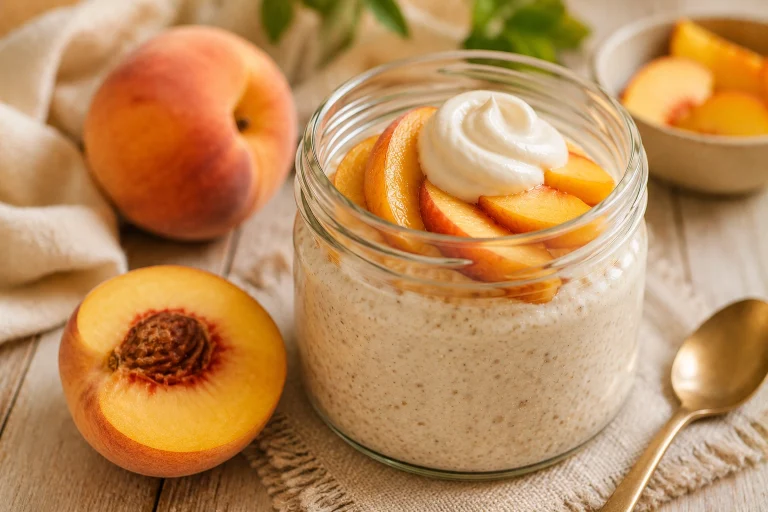
Peaches & Cream Overnight Oats
Soft, sweet peaches over creamy vanilla oats a sunny, summery jar that uses fresh or tinned fruit.

Cinnamon Roll Overnight Oats
Swirls of cinnamon and a creamy yoghurt glaze make this jar taste just like a warm cinnamon roll.
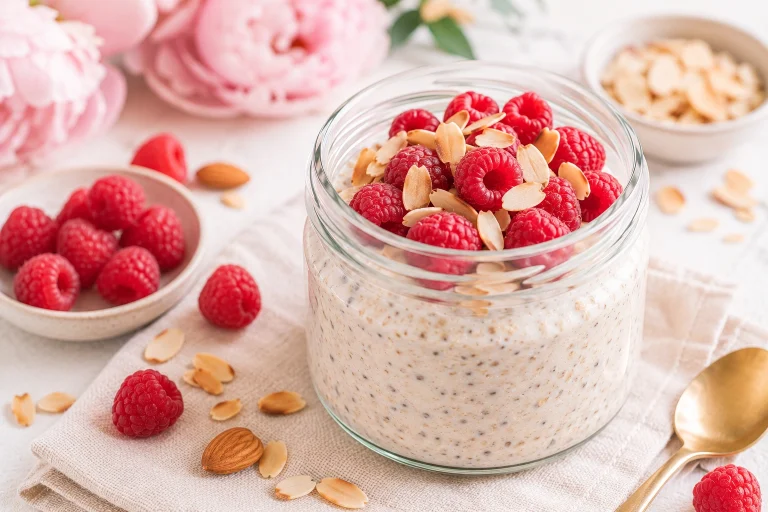
Raspberry Almond Overnight Oats
Tart raspberries and nutty almond come together over a creamy almond-milk base naturally dairy-free.
Keep reading

Overnight Oats Without Chia Seeds, Yoghurt or Milk (Every Swap That Works)
Out of chia seeds, yoghurt or milk? Overnight oats are forgiving. Here is the exact swap for every ingredient — including how…
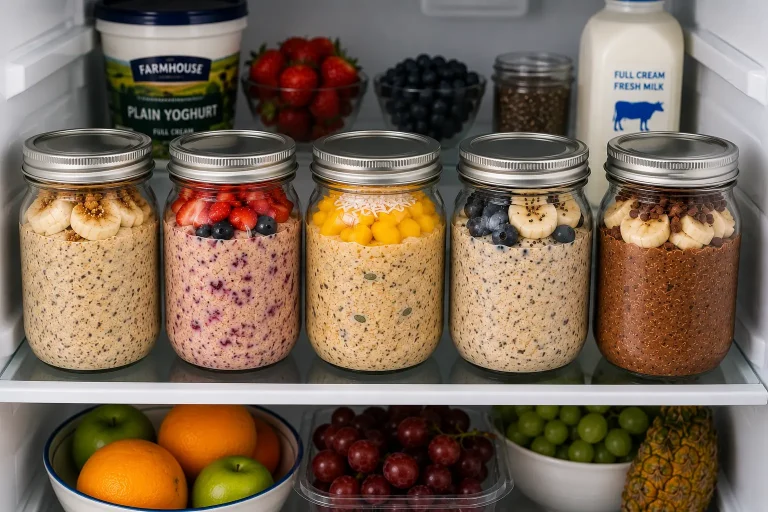
Best Toppings for Overnight Oats That Add Nutrition
Toppings and Nutrition Your jar of overnight oats starts as a blank base. What you add turns it into a meal that…
Jungle Oats Overnight Oats: How to Use SA’s Favourite Oats (+ Nutrition)
Can you use Jungle Oats for overnight oats? Yes — the original rolled oats are ideal. Here is which Jungle Oats to…
Hungry for more?
Browse the full collection of proudly South African overnight oats recipes, or start the free 7-Day Challenge.
Browse Recipes →Free 7-Day ChallengeNever miss a recipe.
Fresh overnight oats recipes, SA shopping tips and better-breakfast ideas, delivered to your inbox. Join the Overnight Oats SA community.