Digestion and Gut Health
A note before you read. This article shares general guidance based on published research and registered dietitian advice. It does not replace medical care for diagnosed digestive conditions. If you have irritable bowel syndrome, inflammatory bowel disease, coeliac disease, or any persistent digestive symptoms, work with a doctor or registered dietitian on your eating plan. Individual tolerance varies and what works for one sensitive stomach may not work for another.
You make the jar. You eat the jar. An hour later your stomach feels like a balloon and your gut is on a slow march to the bathroom. For people with sensitive digestion, IBS, lactose intolerance, or food triggers they cannot quite pin down, overnight oats can swing either way. Built right, they soothe and steady the gut. Built wrong, they trigger the exact symptoms you wanted to avoid.
The short answer. Overnight oats can work beautifully for sensitive stomachs when you control three things. The portion (no more than half a cup of dry oats per jar), the milk (lactose free if dairy is your trigger), and the toppings (low FODMAP options only). Get those right and the soluble fibre in oats becomes a digestive ally rather than an enemy.
Here is the practical framework, the science of why oats can help, the common triggers to avoid, and three gentle recipes that work for most sensitive stomachs.
Why Oats Can Actually Help Sensitive Digestion
Oats contain a specific soluble fibre called beta glucan. It forms a gel in the gut that slows digestion, supports the growth of beneficial bacteria, and helps regulate bowel movements. The British Dietetic Association and clinical IBS dietitians recommend soluble fibre as a useful tool for both constipation predominant IBS and diarrhoea predominant IBS, because it normalises stool consistency in both directions.1
Soaking oats overnight adds a second benefit. The cool soak softens the grain and breaks down some of the starch through natural enzyme action, which makes the bowl easier to digest than a quick cooked porridge.2 Add chia seeds and the gel forming action multiplies. Chia is described by IBS dietitians as naturally demulcent, meaning it soothes the gut lining as it passes through.3
The trouble starts when the supporting ingredients fight the oats. Lactose in dairy milk. Fructans in honey. Polyols in apple. Excess fructose in dried fruit. Each of these is a FODMAP, a category of carbohydrate that ferments in the gut and triggers bloating, gas, and cramping in sensitive people.4
The Three Sensitive Stomach Profiles
Sensitive stomachs are not one condition. The triggers and the fixes change depending on which sensitivity is driving your symptoms. Most readers fall into one of three groups.
Group 1, Lactose Intolerance
- The trigger. Dairy milk, yoghurt, and the lactose in fresh cheeses.
- The fix. Use lactose free milk or a tested plant milk like almond, rice, or oat milk. Use lactose free yoghurt or coconut yoghurt instead of regular yoghurt.
- Common in. Adults of African heritage, where adult lactose intolerance affects a large share of the population.
Group 2, IBS and FODMAP Sensitivity
- The trigger. A wider list including lactose, large amounts of honey, dried fruit, apple, mango, watermelon, sugar substitutes, and oversized portions of any FODMAP food.
- The fix. Follow Monash University’s low FODMAP serving guidance. Stick to half a cup of dry oats, use lactose free or tested plant milk, and choose low FODMAP toppings.
- Diagnosis. Get formal IBS diagnosis from a doctor before assuming. Many digestive issues mimic IBS but need different treatment.
Group 3, Coeliac Disease and Gluten Sensitivity
- The trigger. Gluten from wheat, barley, and rye, including cross contamination on standard oat lines.
- The fix. Use certified gluten free oats only. Standard rolled oats are usually contaminated with wheat during processing.
- Important. Some people with coeliac disease react to a protein in oats called avenin. Speak to your doctor before introducing oats if you have diagnosed coeliac.
The Portion That Matters
Portion size is the most often overlooked piece of the puzzle for sensitive stomachs. Monash University, the global authority on low FODMAP food testing, sets the green light serving for rolled oats at half a cup (52 grams) of uncooked oats per meal.5 Larger portions cross into moderate FODMAP territory and start triggering symptoms in sensitive people.
This portion guidance matters even for non IBS sensitive stomachs. A cup of dry oats may simply be too much fibre at once for a gut that handles food slowly. Start with the half cup measure. Build up only if symptoms stay clear for two weeks.
The Toppings Traffic Light
This is where most sensitive stomachs get caught out. The base of the jar might be perfectly safe, then a spoon of honey and a handful of raisins push the bowl into trigger territory. Use the three colour traffic light below as your reference.
Green Light
- Strawberries
- Blueberries
- Kiwi fruit
- Firm banana, small amount
- Chia seeds
- Walnuts
- Pumpkin seeds
- Sunflower seeds
- Cinnamon
- Vanilla extract
- Maple syrup, small drizzle
- Peanut butter, small amount
Amber Light
- Ripe banana, larger amounts
- Cocoa powder
- Coconut, small amounts
- Almonds, 10 nuts maximum
- Strawberry jam, low sugar
- Raspberry, small portion
- Lactose free yoghurt
Red Light
- Honey
- Dried fruit (raisins, dates, sultanas) in any quantity
- Apple, fresh or sauce
- Mango
- Watermelon
- Cashews
- Regular dairy milk
- Regular yoghurt with lactose
- Inulin or chicory root fibre
- Agave nectar
Reference Monash University’s low FODMAP app or the most current FODMAP guidance for individual tolerance amounts, which the university updates regularly based on new food testing.5
The Milk Swap Table
The milk choice is the single biggest leverage point for most sensitive stomachs. The table below shows the common SA milk options and their suitability for sensitive digestion.
| Milk Type | Suitability | Notes |
|---|---|---|
| Regular cow’s milk | Avoid | Contains lactose, a FODMAP |
| Lactose free dairy milk | Recommended | Lactose removed, same nutrition |
| Amasi | Often poorly tolerated | Some fermentation reduces lactose but not enough for many IBS patients |
| Unsweetened almond milk | Recommended | Low FODMAP, widely available in SA |
| Rice milk | Recommended | Low FODMAP, very gentle |
| Oat milk | Generally tolerated | Use small portions, check label for added FODMAPs |
| Soy milk (from soy protein) | Recommended | Low FODMAP version available, read label |
| Soy milk (from whole soy beans) | Avoid | High FODMAP version, common in SA cheaper brands |
| Coconut milk drink | Generally tolerated | Small portions only, varies by brand |
Three Gut Friendly Recipes
Each recipe below is built within the low FODMAP framework and works for most sensitive stomachs. Start with Recipe 1 if you are new to gut friendly overnight oats. The other two add variety once your gut accepts the base.
01 The Gentle Base
The lowest risk overnight oats jar for most sensitive stomachs. Built around Monash University’s safe portions for IBS readers, with no high FODMAP additions of any kind.
Ingredients
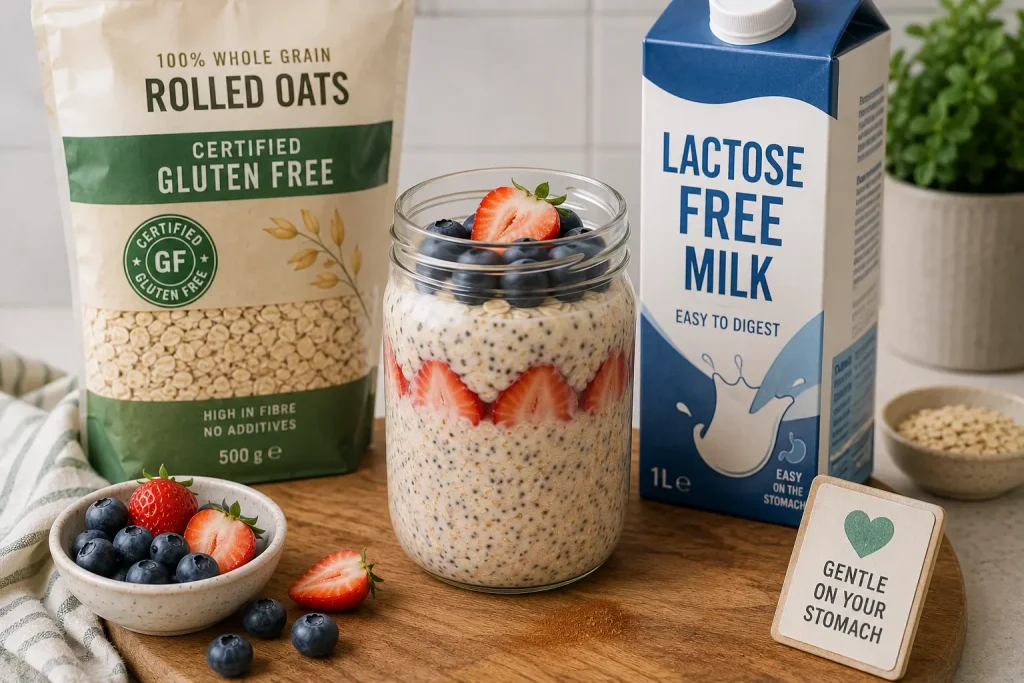
- Half a cup of certified gluten free rolled oats (50g)
- Three quarters of a cup of lactose free milk or unsweetened almond milk
- One tablespoon of chia seeds
- Two tablespoons of lactose free yoghurt or coconut yoghurt
- Half a teaspoon of vanilla extract
- A pinch of cinnamon
- A small handful of strawberries or blueberries (in the morning)
- One tablespoon of chopped walnuts (in the morning)
Method
- Add the oats, chia, yoghurt, milk, vanilla and cinnamon to a glass jar.
- Stir for a full minute to combine and prevent chia clumping.
- Seal and refrigerate overnight.
- Top with the berries and walnuts in the morning. Eat slowly.
Why it works. The 50 gram portion respects the Monash low FODMAP threshold. The lactose free milk removes the most common trigger. The chia adds soluble fibre that soothes the gut. The walnuts and berries deliver flavour without crossing FODMAP boundaries.
02 Banana Peanut Butter Jar
A creamy, satisfying option once your gut accepts the gentle base. The peanut butter slows digestion and provides protein, which suits people whose IBS leans toward loose stools.
Ingredients
- Half a cup of certified gluten free rolled oats
- Three quarters of a cup of lactose free milk or rice milk
- One tablespoon of chia seeds
- One tablespoon of smooth peanut butter (one ingredient, no additives)
- Half a firm banana, sliced (use small amount, around 50g)
- One tablespoon of lactose free yoghurt
- Half a teaspoon of vanilla extract
- A pinch of cinnamon
Method
- Stir the oats, chia, milk, yoghurt, vanilla and cinnamon in a glass jar.
- Stir in the peanut butter so it disperses through the mix.
- Seal and refrigerate overnight.
- Add the banana slices in the morning.
Why it works. Peanut butter is low FODMAP in normal portions. Firm banana (not overripe) stays low FODMAP at small portions. The protein and fat slow digestion, which often helps loose stool IBS patterns.
03 Berry Chia Power Jar
The highest fibre option in this collection. Designed for people whose sensitive stomach leans toward constipation, where extra soluble fibre helps move things along gently.
Ingredients
- Half a cup of certified gluten free rolled oats
- Three quarters of a cup of lactose free milk or unsweetened almond milk
- Two tablespoons of chia seeds
- One tablespoon of ground flaxseed
- Two tablespoons of lactose free yoghurt
- A small handful of fresh blueberries and strawberries
- One tablespoon of chopped walnuts (in the morning)
- Half a teaspoon of cinnamon
- A small drizzle of maple syrup, optional
Method
- Combine the oats, chia, flaxseed, yoghurt, milk and cinnamon in a glass jar.
- Stir for a full minute since the chia and flax both gel.
- Seal and refrigerate overnight.
- Top with the berries and walnuts in the morning. Drizzle the maple syrup if using.
Why it works. Two tablespoons of chia plus a tablespoon of flax delivers a substantial soluble fibre dose that gently encourages bowel movement without harsh stimulation. Drink an extra glass of water with this jar to help the fibre work.
The Five Habits That Help Beyond the Recipe
The jar is one part. Sensitive stomachs respond to habits as much as to ingredients.
Eat slowly. A sensitive gut struggles with food eaten in a rush. Sit down for ten minutes. Chew each spoonful properly. Sip water between bites.
Introduce changes one at a time. If you are new to overnight oats with a sensitive stomach, do not add chia, flax, walnuts, lactose free yoghurt, and berries on day one. Start with the gentle base and add one new ingredient every three days. This lets you identify any individual trigger.
Drink water with your jar. Soluble fibre needs water to work properly. A glass of water alongside the oats helps the chia, flax and beta glucan move through your gut smoothly.
Eat consistently. A predictable eating rhythm helps sensitive guts. Try to eat your overnight oats at the same time each morning rather than skipping breakfast some days and eating it at eleven on others.
Keep a symptom diary. For two weeks, log what you ate and how you felt. Patterns emerge fast. The diary tells you what your gut tolerates better than any general guide can.
When to See a Doctor
This article covers general guidance for ordinary sensitive stomachs. Some symptoms need medical attention, not recipe adjustments.
See a doctor if you have unexplained weight loss, blood in your stool, persistent pain that wakes you at night, a strong family history of bowel cancer, or symptoms that started after age 50. These can point to conditions beyond IBS and need proper investigation.
If your symptoms are clearly IBS or mild lactose intolerance, the recipes above are a strong starting point. For diagnosed coeliac disease, inflammatory bowel disease, or ongoing severe symptoms, work with a registered dietitian who can build a plan around your specific tolerances.
The Bottom Line
Overnight oats can be a genuine friend to a sensitive stomach when you respect three rules. Keep the portion at half a cup of dry oats. Swap regular dairy for lactose free milk or a tested plant milk. Stick to low FODMAP toppings, especially strawberries, blueberries, chia, and walnuts. The three recipes in this guide give you a working starting point. Build from the gentle base, introduce one change at a time, and your gut tells you what works. If you have a diagnosed condition, always make these decisions alongside a doctor or registered dietitian.
Frequently Asked Questions
Are overnight oats good for a sensitive stomach?
Yes for most people, when built carefully. The soluble fibre in oats (especially beta glucan) supports gut motility and can help with both constipation and loose stools. The risks come from the milk choice, the portion size, and the toppings. Use lactose free milk, stick to half a cup of dry oats, and avoid common FODMAP triggers like honey and dried fruit if you have IBS.
Are overnight oats low FODMAP?
Plain rolled oats are low FODMAP at portion sizes of half a cup (52 grams) or less, according to Monash University. Larger portions cross into moderate FODMAP territory. The dairy milk used to soak the oats is the more common trigger because lactose is a FODMAP. Swap regular milk for lactose free milk or a tested low FODMAP plant milk like almond or rice milk.
Why do overnight oats give me bloating?
The most common cause is lactose in the milk or yoghurt. The second most common is high FODMAP toppings like honey, large amounts of dried fruit, apple, or mango. Less commonly, the oat portion is too large. Switch to lactose free milk, stick to half a cup of dry oats, choose low FODMAP toppings, and the bloating usually clears.
Can I eat overnight oats if I have IBS?
Yes for most people with IBS, when prepared carefully. The British Dietetic Association recognises oats as a useful soluble fibre source for IBS. Use half a cup of certified gluten free rolled oats, lactose free milk or a tested plant milk, and stick to low FODMAP toppings like strawberries, blueberries, firm banana in small amounts, chia seeds, and walnuts. Always speak to a registered dietitian for personalised IBS guidance.
Are oats gluten free?
Oats are naturally gluten free, but most commercial oats are processed in facilities that also handle wheat, barley, and rye, which creates cross contamination. People with coeliac disease or strong gluten sensitivity need certified gluten free oats. Look for the certification on the packet rather than assuming.
References
- The Gut Tailor. Overnight Oats and IBS, Are They Safe, Low FODMAP, Good for Your Gut. Clinical IBS dietitian guidance. theguttailor.co.uk
- Fody Foods. Low FODMAP Oats Recipes. Dédé Wilson, co author of The Low FODMAP Diet Step By Step. fodyfoods.com
- Jenna Volpe, RDN. Low FODMAP Overnight Oats and the Demulcent Properties of Chia Seeds for IBS. wholeisticliving.com
- Go Plated. Low FODMAP Overnight Oats, Monash Verified Guidance. goplated.com
- Monash University FODMAP Program. Tested portion sizes for rolled oats and FODMAP food testing references. monashfodmap.com