Texture Mastery
You open the fridge in the morning, lift the lid on yesterday’s jar, and something has gone wrong. The bowl looks like wet cement. The oats have collapsed. The fruit has bled into the milk. The granola you sprinkled on top last night now sits at the bottom looking sad and chewy. This is the moment most people give up on overnight oats and reach for the toast.
The good news is that soggy overnight oats are not the natural result of the soaking process. They are the result of seven specific mistakes that almost everyone makes when starting out, and every one of them has a fix. Get them right and your jar holds a firm creamy texture that genuinely tastes good for three to five days straight.
The short answer. Soggy overnight oats almost always come from one of three sources. The wrong type of oats (instant or quick instead of rolled). Too much liquid relative to the oats (over a 1 to 1.5 ratio). Or toppings added the night before that should have waited for morning. Fix those three and the texture problem disappears.
The Perfect Ratio
Texture starts with the ratio of oats to liquid. The wrong ratio means soup or paste, no matter what else you do. The right ratio gives you firm creamy oats every time.
The Gold Standard Ratio
Half a cup of rolled oats to three quarters of a cup of milk. Adjust slightly thinner or thicker only after you have mastered the standard.
The 1 to 1.5 ratio works for one important reason. Rolled oats absorb about one and a half times their volume in liquid. Any more liquid and the excess sits in the jar as watery slush. Any less and the oats stay dry and chewy.1 A 1 to 1 ratio gives you a thicker, pudding style jar. A 1 to 2 ratio gives you a looser porridge style. Most people land happiest at the 1 to 1.5 sweet spot.
Important note. Some recipes online suggest a 1 to 1 ratio of oats to liquid. This works only if you also add a thick ingredient like yoghurt, which contributes additional moisture. If you use only milk, stay at 1 to 1.5 or your oats end up dry.2
The Oat Type Choice
The single biggest texture decision is which oats you put in the jar. Three options exist on the SA shelf. Each behaves completely differently under an overnight soak.
| Oat Type | Texture After Soak | Suitability |
|---|---|---|
| Rolled oats (old fashioned) | Creamy and firm | Best choice for overnight oats |
| Steel cut oats | Chewy and nutty | Good if you want hearty chew |
| Quick oats | Soft and pasty | Acceptable in a pinch, use less liquid |
| Instant oats | Mushy, near dissolved | Avoid completely |
| Flavoured instant sachets | Mush with added sugar | Avoid completely |
Instant oats are the most common reason for soggy overnight oats. They were designed to cook in two minutes by absorbing hot water fast. Leave them in cold milk overnight and they break down completely, almost dissolving into the liquid.3 Quick oats are slightly better but still soften too much over a long soak. Steel cut oats sit at the other end of the scale, holding a satisfying chewiness even after five days.4
For most South African shoppers, the rolled oats option is the right pick. Find them as Jungle Oats, Bokomo, or any house brand rolled oats at Checkers, Pick n Pay, Woolworths, Shoprite, or Boxer. Look for “rolled oats” or “old fashioned oats” on the label, not “instant” or “quick cook.”
The Seven Reasons Your Jar Gets Soggy
Beyond ratio and oat type, five other mistakes cause sogginess. Each one has a precise fix.
01 You Used Instant or Quick Oats
The ProblemInstant and quick oats are pre cooked and rolled extra thin so they soften fast in hot water. Cold soaking overnight breaks them down completely.
The FixSwitch to rolled oats. Look for “rolled oats,” “old fashioned oats,” or “large flake oats” on the packet. Avoid anything labelled “instant,” “quick cook,” or any flavoured sachet.
02 Your Liquid Ratio Is Too High
The ProblemOne cup of milk to half a cup of oats sounds reasonable but creates a soupy jar. The oats absorb their fill and excess liquid pools at the bottom.
The FixStick to a 1 to 1.5 ratio. Half a cup of dry oats to three quarters of a cup of liquid. Measure both with a measuring cup. Eye balling the milk is the most common reason for accidentally creating soup.
03 You Added Toppings the Night Before
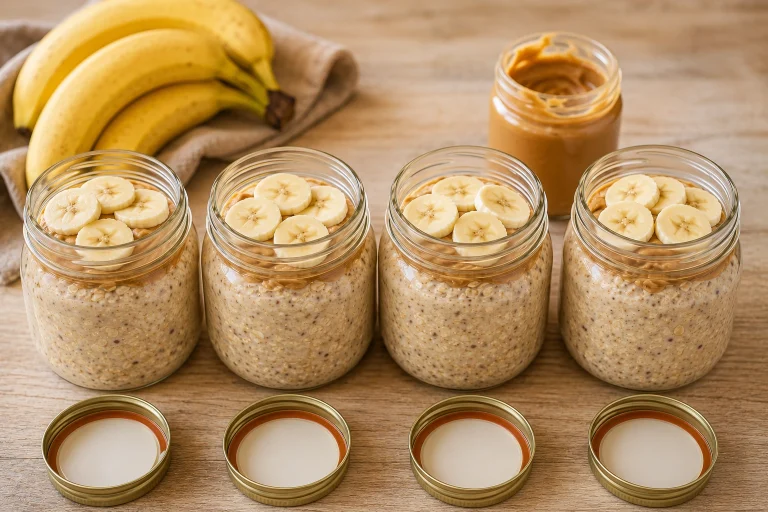
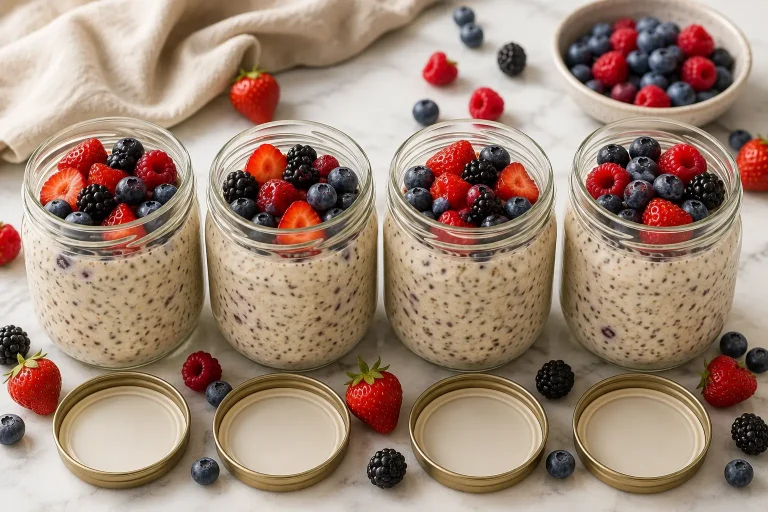
The ProblemNuts go chewy when soaked. Granola turns mushy. Fresh berries break down and bleed colour into the oats. Banana slices go brown and slimy. Each one of these is fine when added in the morning, but a disaster when added the night before.
The FixLayer the toppings in the morning. Make the base of oats, milk, chia and yoghurt the night before. Then add nuts, granola, fresh fruit, and any crunchy element in the morning, right before eating. Even just thirty seconds of contact with the wet base preserves the crunch.5
04 You Skipped the Thickener
The ProblemPlain oats and milk on their own produce a thinner jar than most people prefer. Without something to thicken the mix, the texture leans toward slushy.
The FixAdd chia seeds or Greek yoghurt. Chia absorbs about ten times its weight in liquid and forms a gel that thickens the jar dramatically. Greek yoghurt or double cream yoghurt contributes thick body without adding more liquid. One tablespoon of chia plus two tablespoons of yoghurt is the sweet spot for firm texture.
05 You Stored the Jar Too Long
The ProblemOvernight oats remain safe to eat for three to five days, but the texture continues to soften with each day. By day five, the jar is past its peak texture even though the food is still safe.
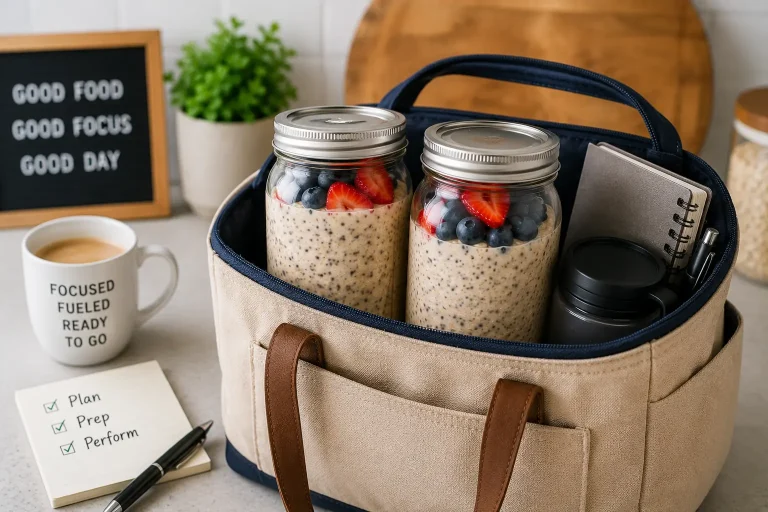
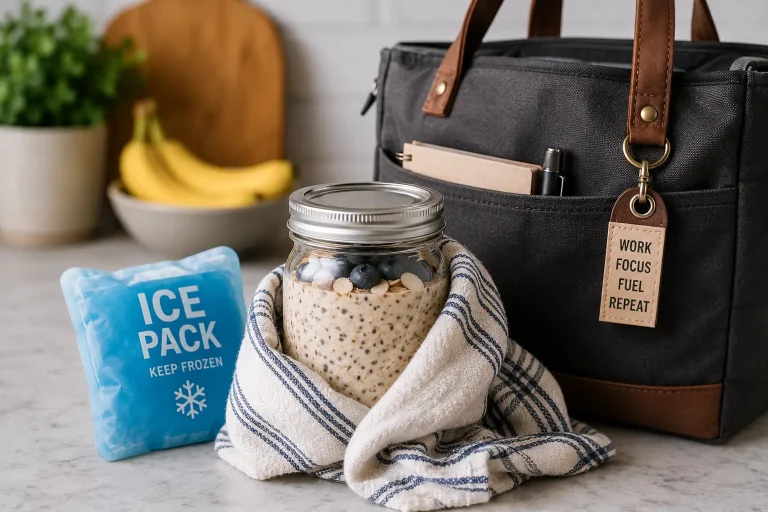
The FixPrep in waves, not in bulk. For a working week, make three jars on Sunday night for Monday to Wednesday breakfast. Then make two more on Wednesday night for Thursday and Friday. The midweek refresh keeps every jar within its peak texture window of one to three days.
06 You Used a Watery Liquid Base
The ProblemSome plant milks (especially thin almond milk and rice milk) carry less body than dairy milk. They produce a thinner jar at the same ratio. Fruit juice as a base creates a soupy, overly sweet mess.
The FixPick a thicker liquid. Dairy milk, amasi, oat milk, or unsweetened almond milk labelled “barista” or “thick” all work well. If you must use thin almond or rice milk, drop the ratio to 1 to 1.25 instead of 1 to 1.5 to compensate. Never use fruit juice as a soaking base.
07 You Stirred in Soft Fruit Too Early
The ProblemSliced banana, strawberries, mango, and peach all break down quickly when sitting in cold liquid overnight. They release water into the jar, dilute the texture, and turn brown around the edges.
The FixSave soft fruit for the morning, mash hard fruit for the base. Add soft fresh fruit only in the morning. If you want fruit flavour in the soaked base, mash a ripe banana or stir in two tablespoons of unsweetened apple sauce. Both add flavour without falling apart overnight.
The Night Before Versus Morning Guide
The single biggest texture preserving habit is layering ingredients across two windows. Use this quick reference for what to add when.
Night Before, Morning, Always
Need time to soften properly
Stay crunchy when added fresh
The liquid base for soaking
Loses crunch within minutes of contact
Need to absorb liquid and gel
Bleed colour and water overnight
Thickens beautifully with the oats
Turn brown and slimy if soaked
Need overnight to infuse flavour
Stays creamy on top as a finish
Holds up well when broken down
Tastes brighter when added fresh
The Perfect Texture Recipe
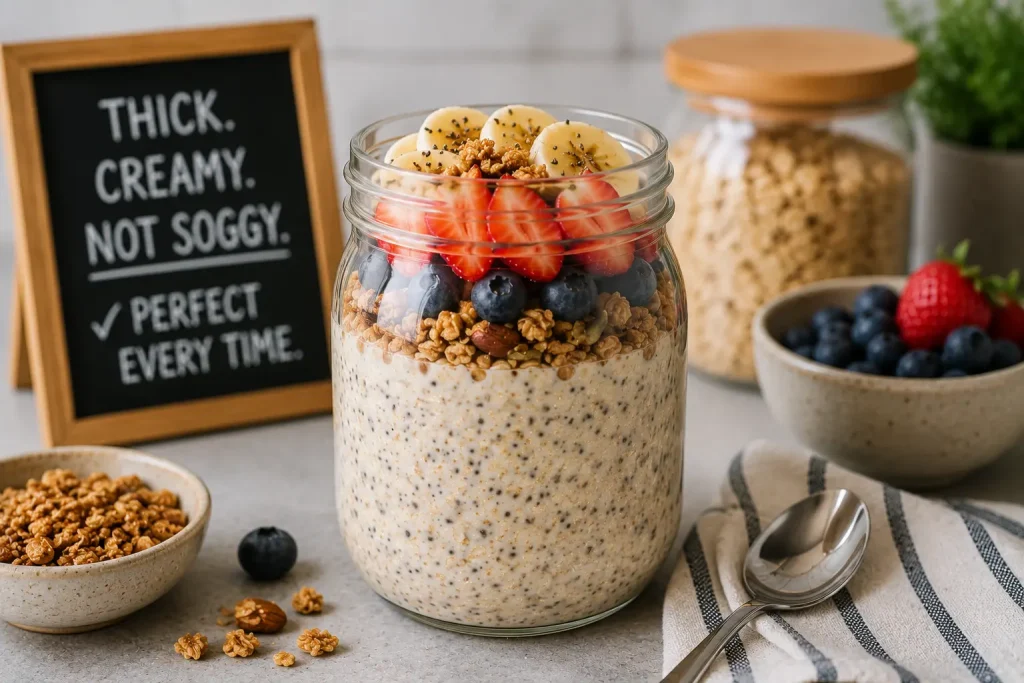
Pulling it all together. The recipe below uses every texture preservation technique in this article. The result is a firm, creamy jar that holds its body for two to three days and tastes the same on Wednesday as it did on Monday.
The Perfect Texture Overnight Oats
The Night Before
- Half a cup of rolled oats (50g)
- Three quarters of a cup of milk or amasi (180ml)
- One tablespoon of chia seeds
- Two heaped tablespoons of plain Greek yoghurt
- Half a teaspoon of vanilla extract
- A pinch of cinnamon
- A pinch of salt (sharpens flavour, optional)
In the Morning
- A small handful of fresh berries or half a sliced banana
- One tablespoon of chopped nuts or granola
- A small drizzle of honey or maple syrup, optional
Method
- Add the oats and chia to a 470ml glass jar.
- Spoon the yoghurt on top of the dry ingredients.
- Pour the milk over the yoghurt and add the vanilla, cinnamon and salt.
- Stir well for one full minute to combine and stop the chia from clumping at the bottom.
- Seal the jar and refrigerate for at least six hours, or overnight.
- In the morning, add the fruit, nuts or granola, and optional drizzle. Stir lightly and eat immediately while the toppings remain crunchy.
Why it works. The 1 to 1.5 ratio prevents soup. The chia and Greek yoghurt thicken the jar without adding extra liquid. The toppings stay separated until the morning so the crunch survives. The pinch of salt sharpens the cinnamon and vanilla flavours without adding sugar.
The Texture Recovery Tricks
Sometimes a jar still ends up softer than you wanted. Three quick fixes can rescue it without starting over.
If the jar is too thin, stir in one extra tablespoon of chia seeds and refrigerate for another twenty minutes. The chia absorbs the excess liquid and thickens the bowl.
If the oats are too soft and you want some crunch back, add a generous tablespoon of granola or chopped nuts on top before eating. The contrast in textures often saves a bowl that would otherwise feel limp.
If the jar is straight watery, drain off a tablespoon or two of liquid from the top, stir, and add a spoon of Greek yoghurt to recover the thickness. This rarely improves a truly broken jar but it salvages a borderline one.
Texture Is a Practice, Not a Recipe
The first three jars you make will not be perfect. That is normal. Your milk brand, the moisture content of your oats, the temperature of your fridge, the size of your jar, even the season can shift the ratio by a small amount. Make notes for the first week. By jar four, you have your personal sweet spot dialled in.
Once you find it, write the ratio on a small piece of masking tape inside your cupboard. The number stays consistent regardless of recipe, and every jar from then on lands exactly where you want it.
The Bottom Line
Soggy overnight oats are not the fault of the breakfast format. They are the result of seven specific mistakes that all have specific fixes. Use rolled oats, not instant. Stick to a 1 to 1.5 ratio of oats to liquid. Add chia seeds or Greek yoghurt as a thickener. Save soft fruit, nuts, and granola for the morning. Use a thicker milk base. Prep in midweek waves rather than five jars at once. Get these right and your jar holds the perfect firm creamy texture from Monday to Friday with no soup in sight.
Frequently Asked Questions
Why do my overnight oats turn soggy?
The most common cause is the wrong oat type. Instant or quick oats break down completely during the overnight soak and turn into a watery mush. Rolled oats hold their shape and absorb liquid evenly. The second most common cause is too much liquid for the oats. Stick to a 1 to 1.5 ratio (half a cup of oats to three quarters of a cup of milk) for firm creamy texture.
What is the best oat to liquid ratio for overnight oats?
For rolled oats, the ideal ratio is 1 part oats to 1.5 parts liquid. That works out to half a cup of dry oats to three quarters of a cup of milk. If you prefer thicker, pudding style oats, drop the liquid to a 1 to 1 ratio. If you want a looser, more porridge style bowl, increase to 1 to 2.
Should I add toppings to overnight oats the night before or in the morning?
Add chia seeds, ground flaxseed, and yoghurt the night before because they thicken the jar and need time to soften. Always add nuts, granola, fresh berries, banana, and any crunchy element in the morning, just before eating. Adding them the night before turns nuts chewy and fruit mushy.
How do I make overnight oats firmer?
Three changes make overnight oats firmer. Use a 1 to 1 oat to liquid ratio instead of 1 to 1.5. Add a tablespoon of chia seeds, which absorb liquid and thicken the jar. Stir in Greek yoghurt instead of using only milk, since the thick yoghurt resists the watery breakdown of milk alone.
How long do overnight oats keep their texture?
Overnight oats hold their best texture from day one to day three. Between days four and five, the jar continues to soften slightly. After day five, the texture is past its peak even though the food remains safe to eat. For best texture every day, prep three jars on Sunday for Monday to Wednesday, then prep two more midweek.
References
- AOL Food. Old Fashioned Versus Quick Oats, What Works Best for Overnight Oatmeal. The 1 to 1 to 1 to 1.5 Ratio Analysis. aol.com
- Boss The Kitchen. Why Are My Overnight Oats Slimy, Get The Ratios Right. bossthekitchen.com
- The Kitchn. 5 Mistakes You Should Always Avoid When Making Overnight Oats. thekitchn.com
- Well Plated by Erin. Overnight Steel Cut Oats, Easy Make Ahead Recipe. wellplated.com
- Vision Recipes. Fix 7 Overnight Oats Mistakes for a Perfect Breakfast, Topping Timing Guidance. visionrecipes.com